LST for Cannabis Plants: Boost Yields Gently
Ever watched your cannabis plants stretch tall and lanky, only to end up with uneven buds and wasted light? From my own experiments, I’ve learned that **low stress training** or LST is the gentle game-changer that flattens your canopy and skyrockets yields without the drama of cuts or breaks.
This technique, often called LST cannabis, involves bending and tying stems to create a bushier plant—perfect for beginners dipping into cannabis plant manipulations or experts fine-tuning autoflowering LST.
I generally use this technique indoors to create an even canopy, without removing any budding sites. Healthy vigorous plants will not even notice.
I’ve turned spindly seedlings into yield machines this way, and in this guide, I’ll share my stories, step-by-step tips, and 2026 trends to help you do the same. Let’s shape those plants to create a bigger harvest easily, and basically stress free.
Table of Contents
- What Is Low Stress Training for Cannabis?
- Benefits of Low Stress Training Your Plants
- When to Start Low Stress Training
- Tools and Materials You’ll Need
- Step-by-Step Guide to Low Stress Training
- Low Stress Training for Autoflowering Plants
- Common Mistakes and How to Avoid Them
- Advanced Tips for Maximizing Yields
- Frequently Asked Questions About LST
- Final Thoughts on Low Stress Training
What Is Low Stress Training for Cannabis?
Low stress training, or LST, is a simple method where you gently bend and secure cannabis stems to encourage horizontal growth instead of vertical stretching. This breaks apical dominance—the plant’s natural focus on one main cola—and redirects energy to side branches for a fuller, flatter canopy.
From my grows, I first tried LST on a lanky sativa that was going to just get too tall; bending it down created multiple colas and doubled my harvest. It’s low-risk compared to high-stress techniques like topping, fiming, manifolding, making it ideal for cannabis low stress training.
Always check local laws before growing cannabis, as legality varies by location. In 2026, LST remains popular for indoor efficiency.
For more basics, see our complete cannabis welcoming and growing guide.
Benefits of Low Stress Training Your Plants
LST boosts yields by exposing more bud sites to light, improving airflow to prevent mold, and keeping plants compact for small spaces. In my experience, LSTed plants yield 20-50% more than untrained ones. It is hands on however…
Additionally, it’s gentle, reducing recovery time and stress. This ties into increase cannabis yields without extra nutrients or lights.
From my indoor trials, LST helped my plants thrive. Pair it with our indoor growing tips for best results.
When to Start Low Stress Training
Begin LST in the vegetative stage, when plants have 4-6 nodes—around 3-4 weeks old. Stems are flexible then, making bending easy without breaks.
I’ve learned the hard way: Starting too late on woody stems risks damage. For autoflowers, start even earlier due to their short veg phase.
In 2026, growers emphasize early LST for flat canopy.
Check our germination guide to get seedlings ready.
Tools and Materials You’ll Need
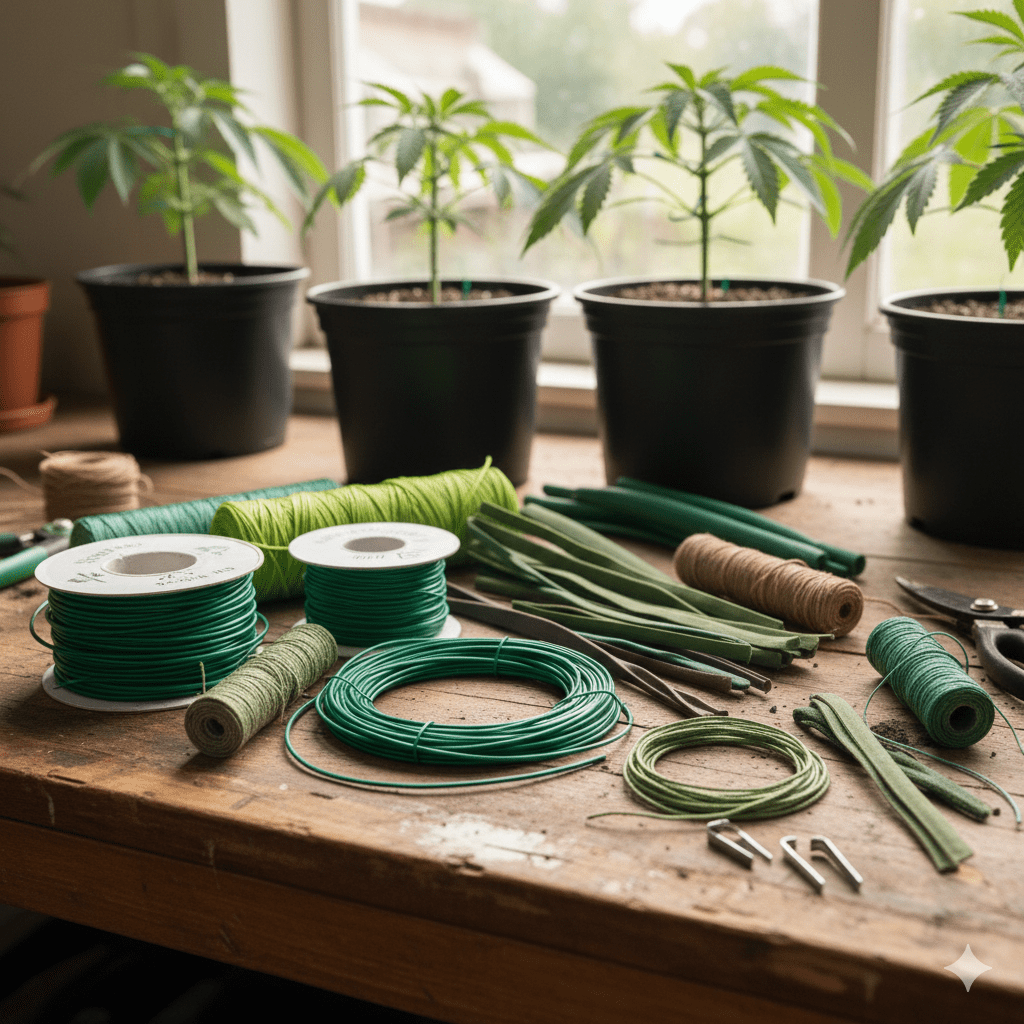
Gather soft ties like garden wire or twist ties, stakes or hooks for anchoring, and scissors for adjustments. Avoid harsh strings that cut stems.
From my grows, reusable Velcro ties are lifesavers—they’re adjustable and gentle.
This setup costs little but pays off big. Link to our beginner cannabis guide for starting strong seedlings ready for your LST manipulations.
Step-by-Step Guide to Low Stress Training
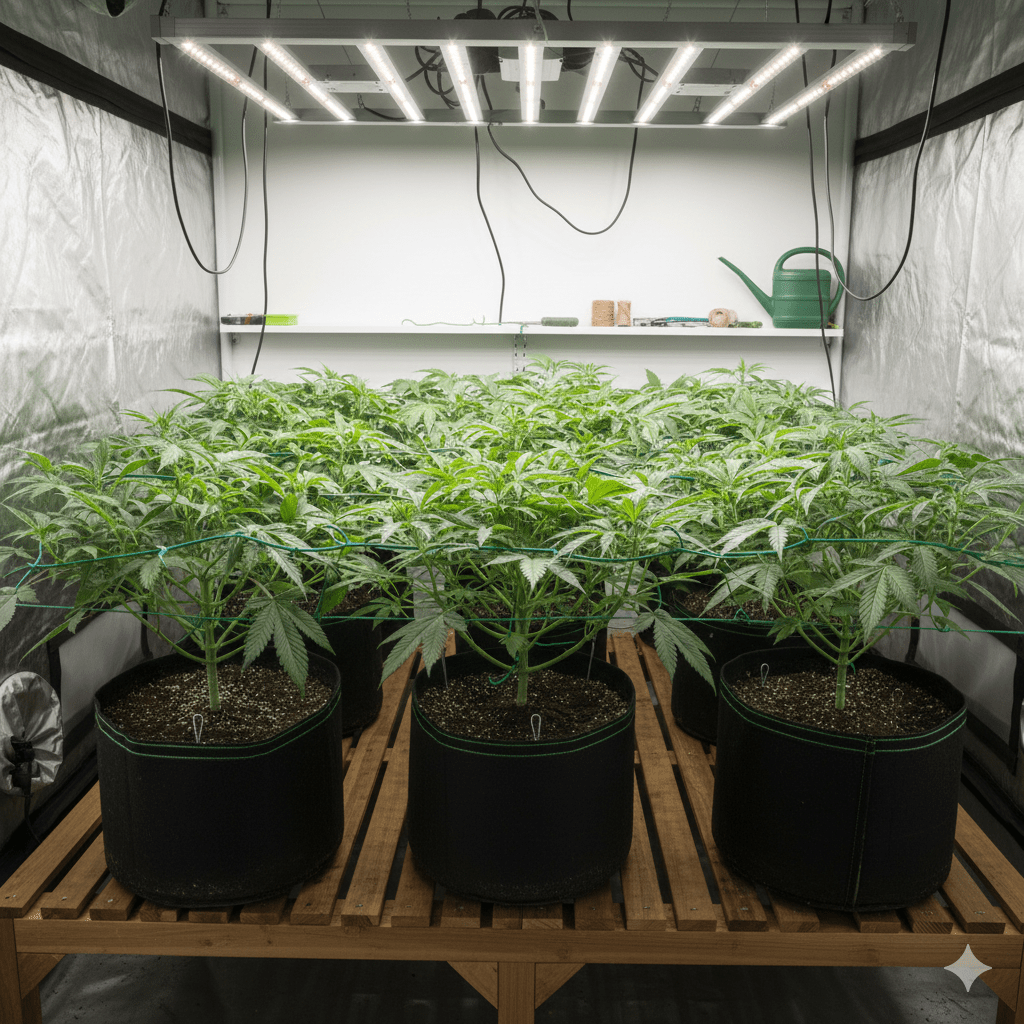
Follow these steps for effective LST:
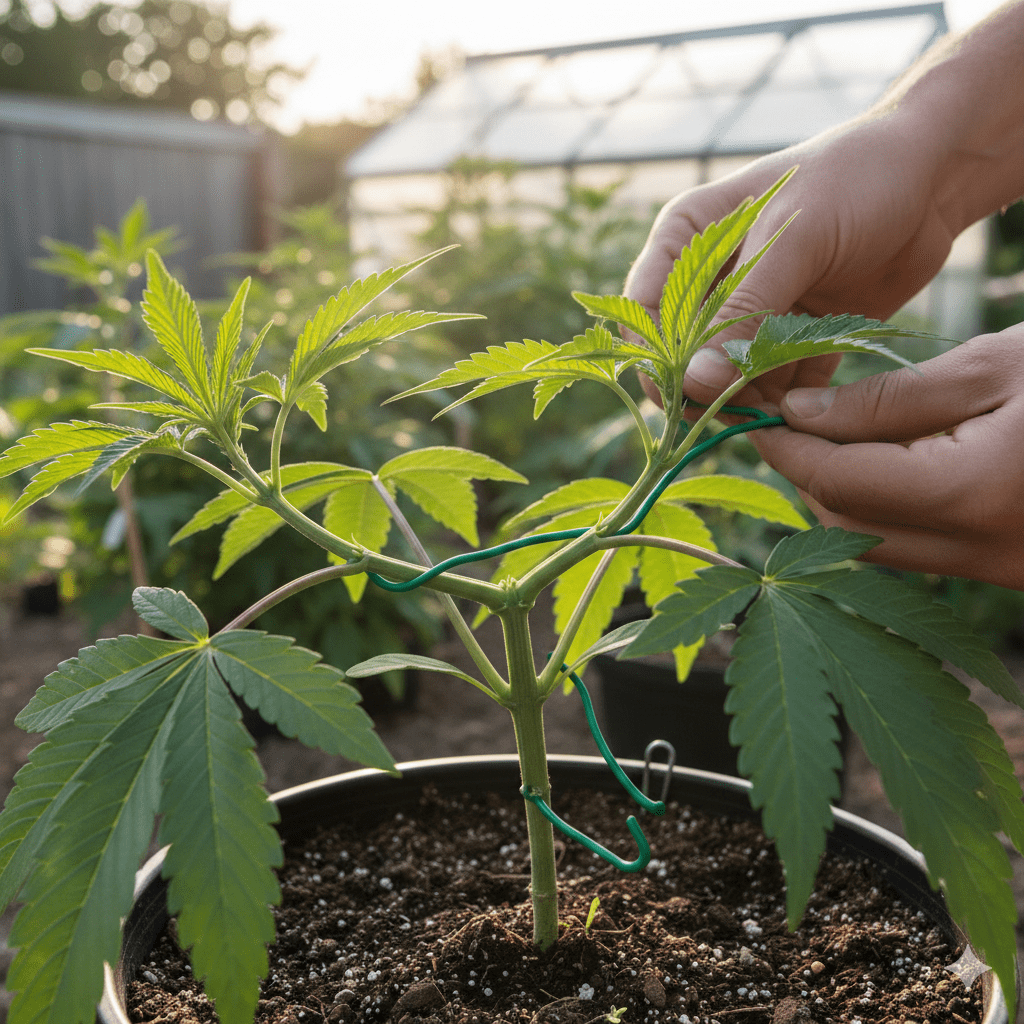
- Identify the main stem and gently bend it sideways at a 90-degree angle.
- Secure with a tie to a stake or pot edge—keep tension light.
- Repeat on side branches as they grow, aiming for an even canopy.
- Monitor and adjust ties weekly to prevent constriction.
- Continue until early flowering, then let buds develop.
In my early harvests, this created bushy plants with even light exposure. For visuals, imagine a wide, flat shape, as in the image on the right.
Low Stress Training for Autoflowering Plants
Autoflowering LST requires quicker action since veg is short—start at 2-3 weeks. Bend gently to damage.
From experiments, LST on autos boosted yields, it’s forgiving and rewarding.
Explore our regular seeds guide for non-auto options.
Common Mistakes and How to Avoid Them
Avoid these pitfalls:
- Bending too hard—go slow to prevent snapped limbs.
- Tight ties—loosen as stems thicken…this technique is hands on, so check often.
- Over-training in flower—stop early to focus energy on buds, I pretty much stop all LST after flower is initiated.
- Ignoring airflow—space branches to reduce humidity risks, defoliate if you need to for air flow.
I’ve fixed breaks with tape, on many occasions….prevention is key.
Like our SCROG guide, patience wins.
Advanced Tips for Maximizing Yields
Combine LST with defoliation for better light penetration. In 2026, hybrid LST-SCROG setups trend for massive colas.
From advanced grows, multi-bend on indicas creates 8+ tops. Try with our FIMming guide.
Monitor pH and nutrients—LST amps growth demands, so be sure to feed what they need.
Frequently Asked Questions About LST
Can LST hurt plants? Rarely, if done gently—it’s low stress…cannabis plants are amazingly tough!
Best strains? Bushy indicas excel. See our THC vs CBD post.
Yield increase? Up to 50% in my experience.
Final Thoughts on Low Stress Training
Low stress training transforms cannabis plants from tall to an even canopy, boosting yields and efficiency. LST has empowered me to maximize every setup, can be used outdoors as well.
Start small, adjust often, and watch your harvests increase.
This article is provided for educational and informational purposes only. It is not intended as cultivation or grow advice, nor does it encourage any illegal activity. All cannabis seeds sold on JustCannabisSeed.com are novelty items, souvenirs, and collectibles only. Germination and cultivation of cannabis seeds may be illegal in your jurisdiction—you are solely responsible for complying with all local, state, and federal laws. We do not condone breaking any laws. For full details, please read our Disclaimer, Terms & Conditions, and Privacy Policy.