
Blog
Low Cost Greenhouse Heating for Winter Grows
Keeping Your Greenhouse Warm Without Breaking the Bank
Jerry ‘The Ghost’ here. As the frost starts creeping in and the nights get long, I know exactly what’s on your mind: how to keep those ladies warm without watching your bank account drain into the local power company’s pockets. Heating greenhouses can be a nightmare if you rely solely on electricity from the grid. In my 50-plus years of gardening….many of which I used a greenhouse, I’ve learned that winter growing doesn’t have to be a choice between a massive utility bill and frozen plants. From my own grows, especially those early experiments in the late 70s and 80s, I’ve found that a little bit of “old school” ingenuity can keep your garden thriving even when the snow is piling up outside.
I remember one particularly brutal winter back in Washington state where I nearly lost a crop of high-quality Sativas because my backup heater failed. I had to rush out at midnight and figure out another way to keep the temperature above freezing. It was a stressful night, but it taught me that passive and low-cost methods are actually more reliable than anything you plug into a wall. Today, I want to share those “Ghostly” secrets with you. Whether you’re running a small hobby hoop house or a larger off-grid setup, these tips for heating greenhouse spaces will help you extend your season right through the coldest months. Let’s get those temperatures up and those costs down!
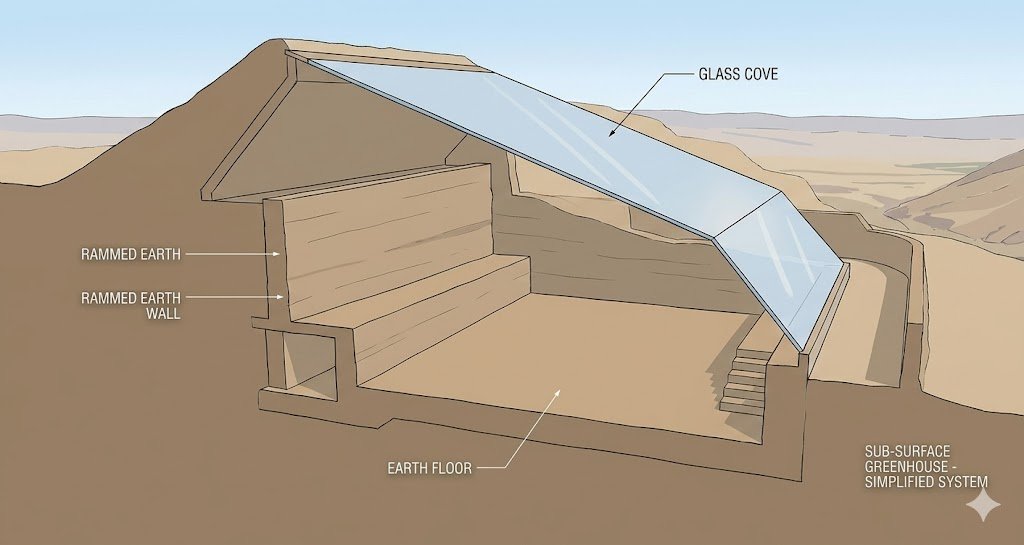
I will be building a Walipini Greenhouse that will be ego-thermally both heated and cooled on my off-grid permaculture property in the mountains of Washington state Stony Oasis Farms. This will be the ultimate in a passively heated and cooled greenhouse…so watch for that write up. I should be able to grow bananas in an area that can get -20 in the winter! With just a bit of supplemental lighting cannabis should be easy.
Disclaimer: Always check local laws before growing cannabis, as legality varies by location. This content is for educational purposes only for those in legal jurisdictions. Stay safe and stay legal!
Table of Contents
- Thermal Mass: The Power of Water and Stone
- Compost Heating: Nature’s Biological Furnace
- Insulation Secrets: Bubble Wrap and Double Walls
- Passive Solar Design: Catching Every Photon
- Emergency Low-Cost Heat for Freeze Events
- Common Winter Greenhouse Mistakes to Avoid
- Final Thoughts from the Garden
Thermal Mass: The Power of Water and Stone
When it comes to heating greenhouse for pennies, thermal mass is your best friend. The concept is simple: you use heavy materials to soak up the sun’s heat during the day and release it slowly at night. Water is the undisputed king of thermal mass because it holds heat so effectively. From my experience, lining the north wall of your greenhouse with black-painted 55-gallon drums filled with water is a total game-changer. During a sunny winter day, those barrels will get surprisingly warm. Once the sun goes down, they act like giant radiators, keeping the ambient temperature several degrees higher than the outside air. I had one greenhouse that was 40 feet long, and had a solid row of barrels for the entire length. I had planting beds for seedlings built on top of them, and they worked well. You can’t just throw one or two small buckets in and expect miracles. You need volume! Not only did it keep the seedlings roots warm, but it provided a steady, gentle heat that prevented the sharp temperature drops that can slow growth down. Additionally, you can use large rocks or even a concrete floor to achieve a similar effect. Sustainable greenhouse climate control is all about capturing the free energy the sun provides and “banking” it for the night. It’s low-tech, zero-cost after the initial setup, and it never breaks down.
Compost Heating: Nature’s Biological Furnace
If you want to get really “outside the box,” you can look into compost greenhouse heating. Think about it: a healthy compost pile can reach internal temperatures of 140°F+ (60°C) just through the work of bacteria. I’ve been experimenting with “Jean Pain” style heating for years. By building a large, active compost pile inside the greenhouse—or better yet, running a coil of black poly-pipe through a pile outside and circulating that warm water through your greenhouse—you can create a constant source of heat. It’s like having a biological furnace that also gives you “black gold” soil for your future grows.
I plan on using this technique to have a constantly heated hot tub to soak in as well. And, will do a write up if I can get that done as well.
From my own grows, I’ve found that even a simple “trench compost” under your garden beds can provide significant bottom heat. Heat rises, so warming the soil is often more important than warming the air. I remember one winter where I grew some incredibly hardy Landrace strains over a bed of decomposing straw and manure. The plants were practically steaming in the morning air! However, you have to manage the moisture and the smell. Make sure your pile is balanced with enough “browns” (carbon) so it doesn’t get stinky. Additionally, this method adds CO2 to your greenhouse environment, which your plants will absolutely love during the day. A def win/win.
Insulation Secrets: Bubble Wrap and Double Walls
You can generate all the heat you want, but if your greenhouse is “leaky,” it may not be that effective. Greenhouse insulation techniques are the key to keeping that heating greenhouse effort efficient. One of the cheapest and most effective tricks I’ve ever used is “horticultural bubble wrap.” By lining the inside of your glass or plastic with large-cell bubble wrap, you create a trapped layer of air that acts as a powerful insulator. It still lets about 80% of the light through but can reduce heat loss by nearly 40%. I plan to use poly carbonate double walled glazing in the Walipini I will be building.
Another method is creating a “double-skin” effect. If you have a single-layer plastic greenhouse, adding a second layer of 6-mil poly with a small air gap between them works wonders. I’ve even used old blankets or heavy tarps to cover the greenhouse at night, pulling them back as soon as the sun comes up. This “night curtain” method is essential if you live in a place where temperatures regularly drop below freezing. Additionally, don’t forget the floor! Insulation boards or even a thick layer of straw on the walkways can prevent the cold from seeping up through the ground. Every little bit of “thermal help” keeps your plants above freezing.
Passive Solar Design: Catching Every Photon
If you are still in the planning stages or can make modifications, passive solar greenhouse design is the ultimate long-term strategy. This isn’t just about heating greenhouse spaces; it’s about how the structure interacts with the environment. You want the long side of your greenhouse facing south to catch the maximum amount of winter sun. The north wall should ideally be solid and well-insulated—I’ve seen folks build their greenhouses against a south-facing brick wall of a house or even partially into a hillside (an “Earth-sheltered” or Walipini style) to take advantage of the earth’s constant temperature.
From my experience, the angle of your glazing matters too. In the winter, the sun is lower in the sky, so a steeper angle can help capture more direct light. I’ve learned that using reflective surfaces ( I like to paint it all bright white) on the north side of the interior can bounce light and heat back onto the plants. It’s like using a giant mirror to double your solar gains. Additionally, make sure you have a way to vent the space. It sounds crazy, but on a clear winter day, a well-insulated greenhouse can actually overheat….even in the dead of winter! Greenhouse temperature management is a balancing act. You need to keep the heat in at night, but you also need to move air during the day to prevent mold and keep your plants breathing, and reduce heat stress.
Emergency Low-Cost Heat for Freeze Events
Sometimes, despite all our heating greenhouse prep, a “Polar Vortex” hits and we need emergency heat *now*. When the power goes out or the temperature drops further than expected, I rely on the “candle heater” trick. It sounds like a myth, but a few large tea light candles placed under an upside-down terracotta pot can generate a surprising amount of radiant heat. The clay pot soaks up the candle’s flame and radiates it outward. In a small, well-insulated space, four or five of these can be enough to keep the temperature above the frost line and save your crop.
In the Walipini I will be building I will actually add a wood stove for those times I need additional heat. Keep in mind…one may have to go out to the greenhouse in the middle of the night to stoke the fire.
Another emergency method I’ve used is “hot water jugs.” If you have a way to boil water (like a wood stove or a camping stove), fill up every gallon jug you have with hot water and nestle them around the base of your most precious plants. Cover the plants and the jugs with a thin frost cloth or a light sheet to trap that warmth. From my own grows, I’ve found that keeping the root zone warm is the priority. A plant can recover from some leaf singe, but if the root ball freezes, it’s game over. These emergency greenhouse heating tactics have saved my plants more than once during my 50 years of greenhouse gardening, and they are essential tools for any budget grower. I am all about figuring out how to do things on the cheap!
Common Winter Greenhouse Mistakes to Avoid
Winter growing is a different beast, and I’ve seen growers make the same mistakes year after year. The biggest one? Overwatering. Because it’s cold and the sun isn’t as intense, your plants won’t “drink” as much water as they do in the summer. If you keep the soil soggy, you’re inviting root rot and “damping off” fungi. Always check the soil with your finger—if it’s moist an inch down, leave it alone! Another mistake is neglecting humidity. When you close up your greenhouse to keep the heat in, the humidity can skyrocket, leading to bud rot (Botrytis). You must have some airflow, even in winter. For sure you need blowing fans most all the time.
Here are a few other things to keep an eye on:
- Ignoring the light: Winter days are short. If your plants aren’t getting at least 14+ hours of light, they might flower prematurely. You might need a small, low-wattage supplemental light just to keep them in “veg.”
- Poor sealing: A single gap in your door or a tear in the plastic can let all your hard-earned heat out. Check your seals! I always have high/low thermometers on hand.
- Not checking the forecast: Winter weather is unpredictable. I’ve learned to check the “lows” every single evening so I can prep my emergency heaters if needed.
- Choosing the wrong seeds: Some strains just hate the cold. Look for Indica-dominant strains or hardy hybrids that are bred for northern climates. Autos can be an excellent choice for winter greenhouse growing.
- Over-fertilizing: Plants grow slower in the winter. If you give them a full summer dose of nutrients, you’ll end up with nutrient burn.
Growing in the winter requires a “softer touch” and a lot more observation. If you’re using low cost greenhouse heating, you are essentially the thermostat. You have to be proactive. But let me tell you, there is no feeling quite like walking into a warm, green, fragrant greenhouse when it’s 20 degrees and snowing outside. It’s good for the plants, but it’s even better for the soul. I like to leave room for a hammock in my greenhouses so I can spend quality time with my plants. I will get down to my skivvies and soak up the sun in a 80 degree greenhouse when it is below freezing outside. It is awesome!
Final Thoughts from the Garden
Winter doesn’t have to be the end of your gardening journey. By using thermal mass, compost, and smart insulation, you can master heating greenhouse spaces on a shoestring budget. These methods are how the “old timers” like me have stayed in the green for decades. It’s about working with nature’s laws of thermodynamics instead of fighting them with expensive technology. Whether you are growing for medicine or just for the love of the plant, I hope these tips give you the confidence to keep those fans spinning and those buds growing all year long.
What’s the coldest temperature you’ve successfully grown in? Have you ever tried the “Jean Pain” compost method or built a solar-heated bench? Share your experiences in the comments—I’m always looking to learn a new trick myself! Let’s keep the heat up and the jars full. Stay warm and happy growing!
Never Miss a Field Note or Grow Update
Get direct heads-up emails whenever new grow guides, strain stories, and farm trials are posted.
Join the JCS Email List• Who is the Ghost? (My Reveal)
• Cannabis Growing Guide 2025-2026
• Real Customer Testimonials & Reviews
• Real Customer Harvest Photos
This article is provided for educational and informational purposes only. It is not intended as cultivation or grow advice, nor does it encourage any illegal activity. All cannabis seeds sold on JustCannabisSeed.com are novelty items, souvenirs, and collectibles only. Germination and cultivation of cannabis seeds may be illegal in your jurisdiction—you are solely responsible for complying with all local, state, and federal laws. We do not condone breaking any laws. For full details, please read our Disclaimer, Terms & Conditions, and Privacy Policy.
