Blog
Guerrilla Growing Cannabis in Dry Climates-The Ghost
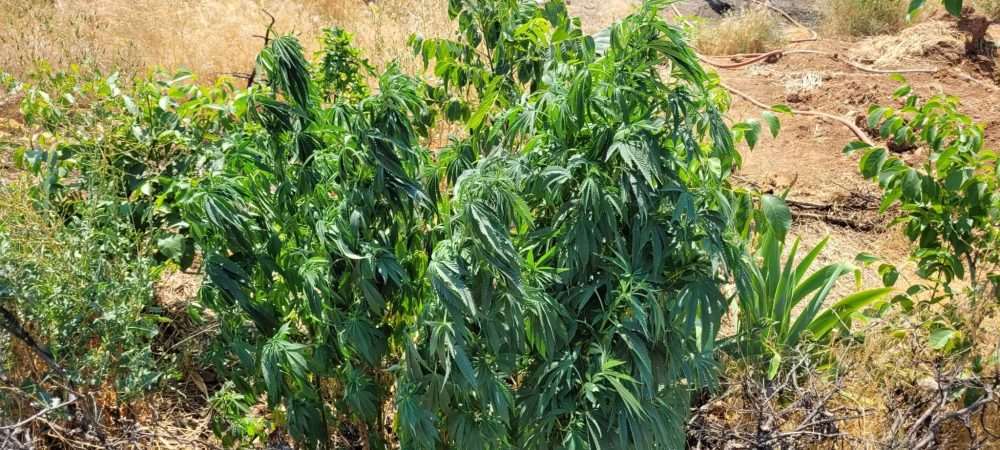
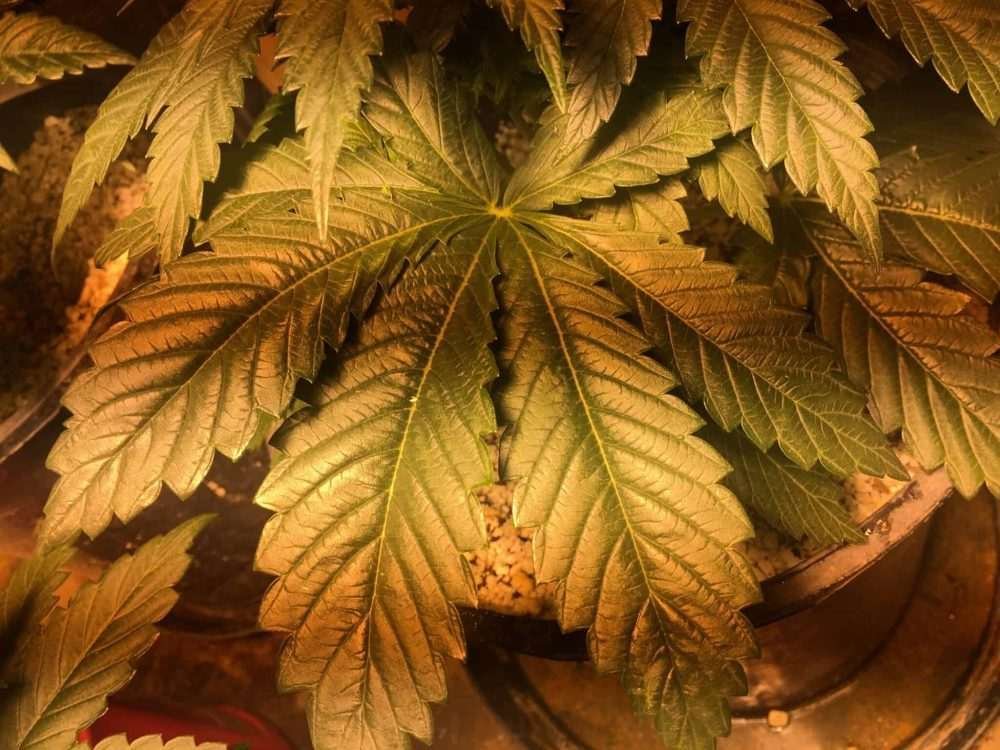
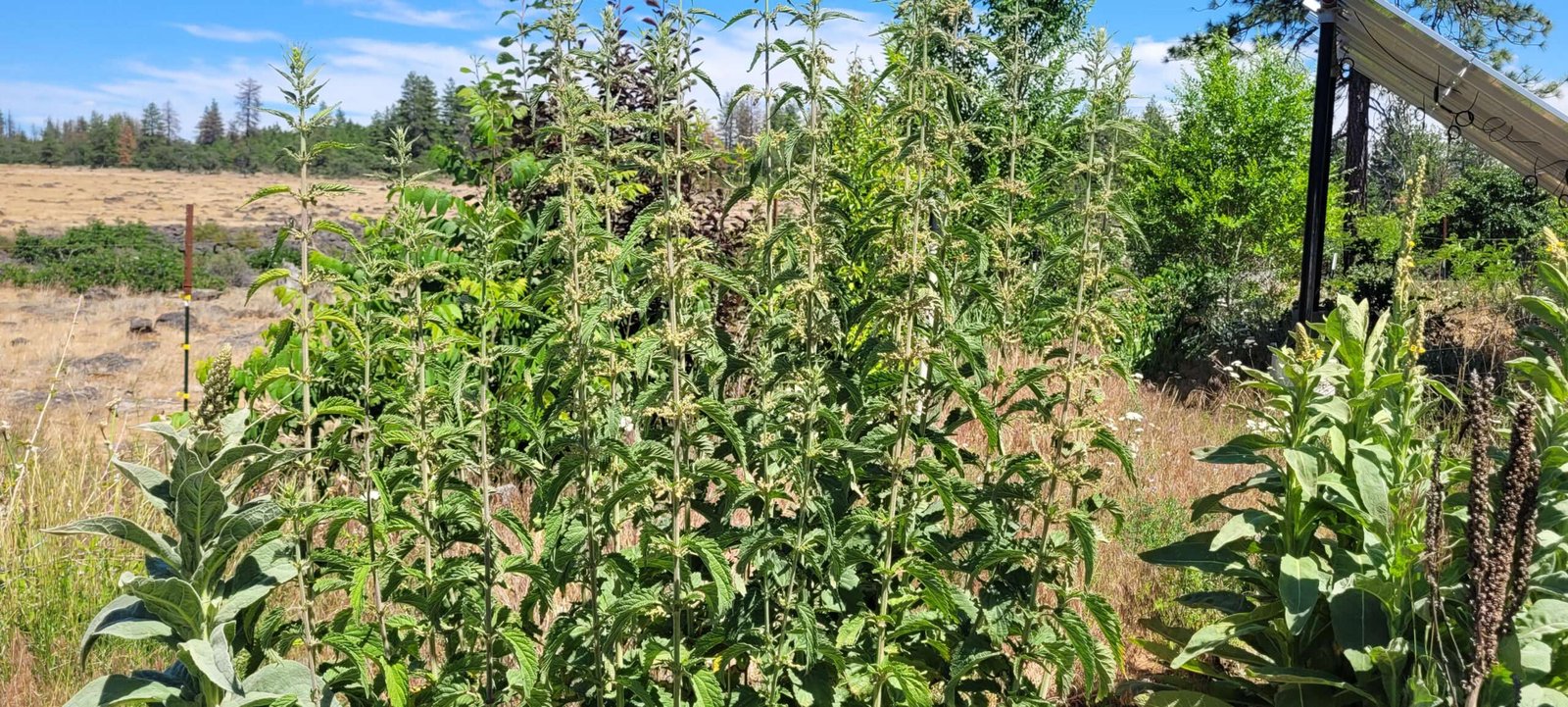
The wilting plants above are from a grow of the D’Qar cannabis strain I grew up on my semi arid off grid property.
The Ghost’s Guide to Arid Stealth
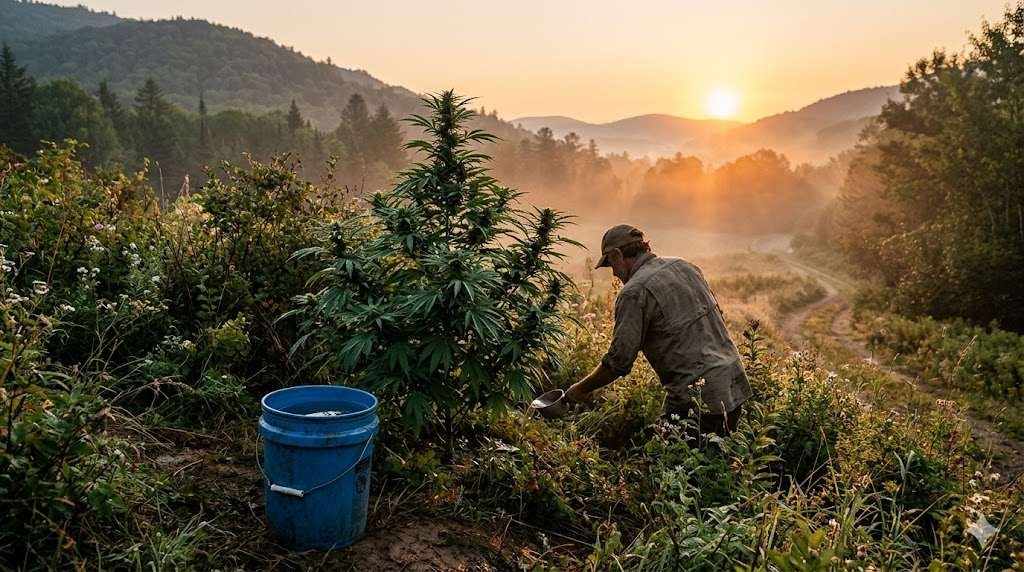
Jerry here, though you might know me better by my pen name, The Ghost, and as the ghost I had to figure out ways to grow guerrilla in the semi-arid climate in which I live.
If there is one thing I have learned in my 50-plus years of growing our favorite plant, is that Mother Nature doesn’t always make things easy. One must play by her rules out and about. This is especially true when you are trying to pull off a successful harvest in the middle of nowhere without a garden hose in sight.
Guerrilla growing cannabis in dry climates is a true test of a grower’s grit. It is about more than just sticking a seed in the ground; it is about outsmarting the sun, the wind, and the lack of rain while keeping your patch completely invisible to the rest of the world.
From my own grows, particularly during my ten-year stint as a dedicated guerrilla grower, I’ve learned the hard way that a dry season can turn a dream harvest into a grow you end up abandoning. I have packed water to my plants on many occasions with varying success. That experience pushed me to find smarter, lazier, and more effective and efficient ways to manage moisture. Today, I’m sharing those secrets with you so you can succeed where others dry up. Let’s dive into how to master the art of the arid guerrilla grow!
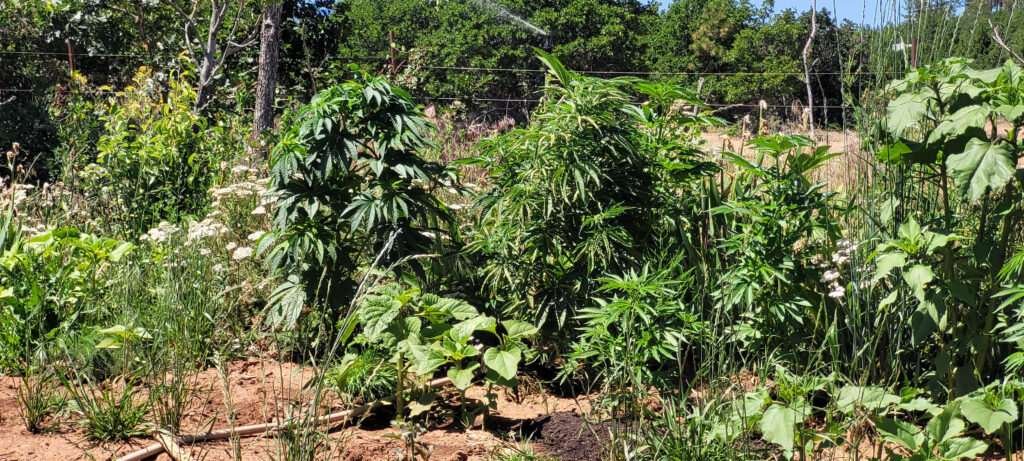
Disclaimer: Always check local laws before growing cannabis, as legality varies by location. This content is for educational purposes only for those in legal jurisdictions. We do not condone illegal activities anywhere, at anytime.
Table of Contents
- Finding the Hidden Oasis: Strategic Site Selection
- Water Retention Secrets: Polymers and Hydrogels
- The Dryland Hugelkultur Planting Method
- Choosing Drought-Resistant Genetics
- Mulching Like a Pro to Beat the Heat
- Common Mistakes in Arid Guerrilla Grows
- Final Thoughts from The Ghost
Finding the Hidden Oasis: Strategic Site Selection
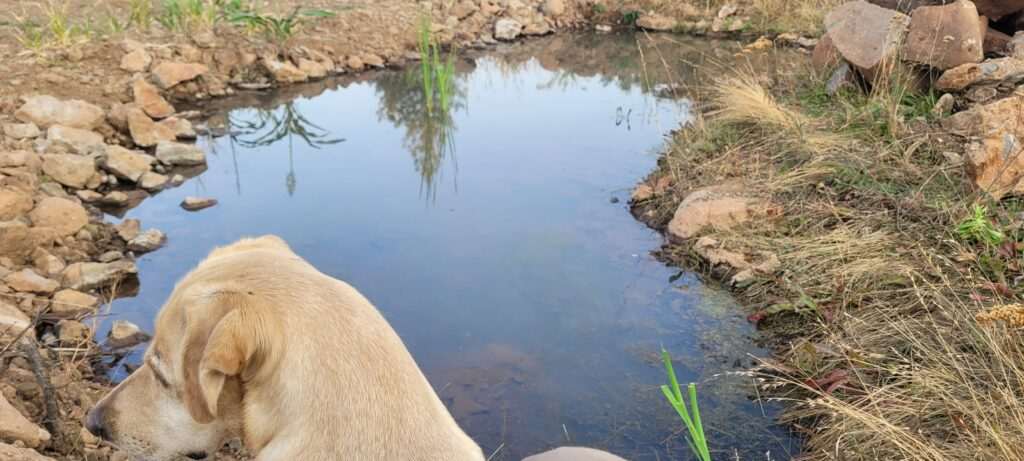
When you are guerrilla growing cannabis in dry climates, your site choice is 90% of the battle. You aren’t just looking for stealth; you are looking for microclimates that naturally hold onto moisture longer than the surrounding desert or scrubland.
I always look for “bottom-land”—the lowest point in a ravine or a gully where rainwater naturally collects and sinks into the soil. Even if the surface looks bone-dry, the water table is usually a few inches closer to your roots down there. Additionally, look for areas with existing vegetation like willow or cottonwood trees; these are “indicator plants” that tell you water is nearby under the surface.
Another trick I’ve used for decades is utilizing the “North Slope” of hills. In the northern hemisphere, the north-facing side of a ridge gets less direct, scorching afternoon sun. This means the soil stays cooler and evaporation happens much slower. However, you still need enough light to get those buds fat, so always be aware of how much sun is available throughout the day.
Really the main ‘trick’ I try to use is planting right next to a water source. I try to find an area where the water level does not change much, and there is ground water just a foot or so in the ground.
One can water the plants till their roots hit the water, then you really only need to fertilize. Spot your grow well , and you may not need to go back until they flower…then just harvest.
Here is another trick to utilize ground water…say the ground water is 3 feet in the ground, rather then having to water these plants for several weeks for them to hit the water, you just dig a hole to plant them in. Planted in a one foot deep hole their roots are that much closer to the water. And, here is how to go about it; dig a hole two feet or more deep, about the size of a five gal bucket.
Then from near by scrap up a good pile of soil (only from the top inch or so) and leaf mold/compost…yes there is compost out in the boonies, pretty much everywhere. I will be writing a post about that soon….just search the blog for ‘compost’. Then fill your hole up to how deep you want the plant. Makes them hit ground water sooner, and makes watering them easy.
Water Retention Secrets: Polymers and Hydrogels
In a dry environment, every drop of water is precious. If you can’t be there often enough to water—and as a “Ghost” you probably shouldn’t be—you need to turn your soil into a sponge.
This is where water retention techniques for cannabis come into play. Many growers use water-absorbing polymers or hydrogels mixed into the soil. These little crystals can hold hundreds of times their weight in water and release it slowly as the soil dries out. From my experience, adding these to your planting hole can help your plants if you cannot be there to water often enough.
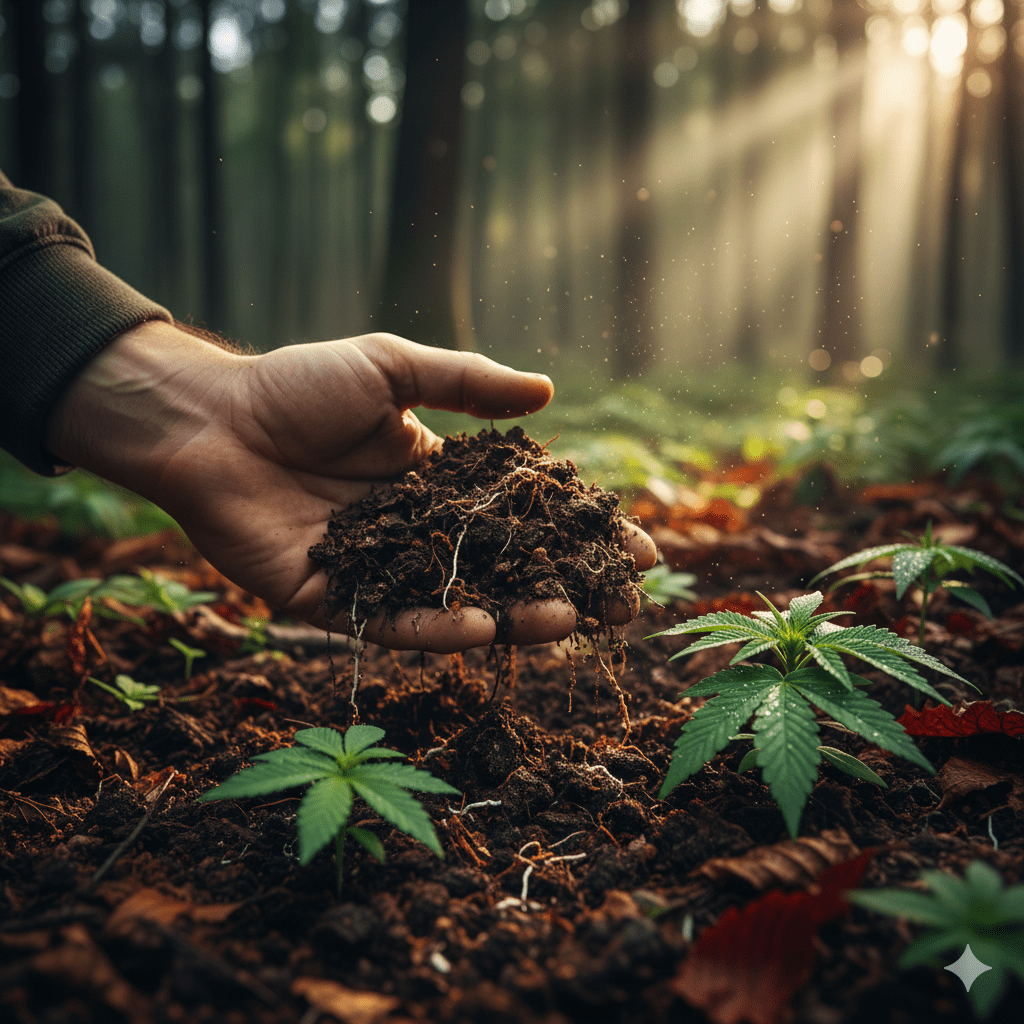
If you want to keep it more natural, I’ve had great success using leaves and organic matter mixed into the native soil, and I generally always do this when planting out and about.
Additionally, I’ve experimented with buried five gallon buckets. You bury an bucket next to your plant and fill it with water. You drill just a couple small holes in the bottom of the bucket (1/8 in or so.) The water slowly seeps through the holes directly to the roots. It’s an ancient technique (used clay pots) that works wonders for guerrilla patches where you can only visit once a week to “refill” the buckets.
The Dryland Hugelkultur Planting Method
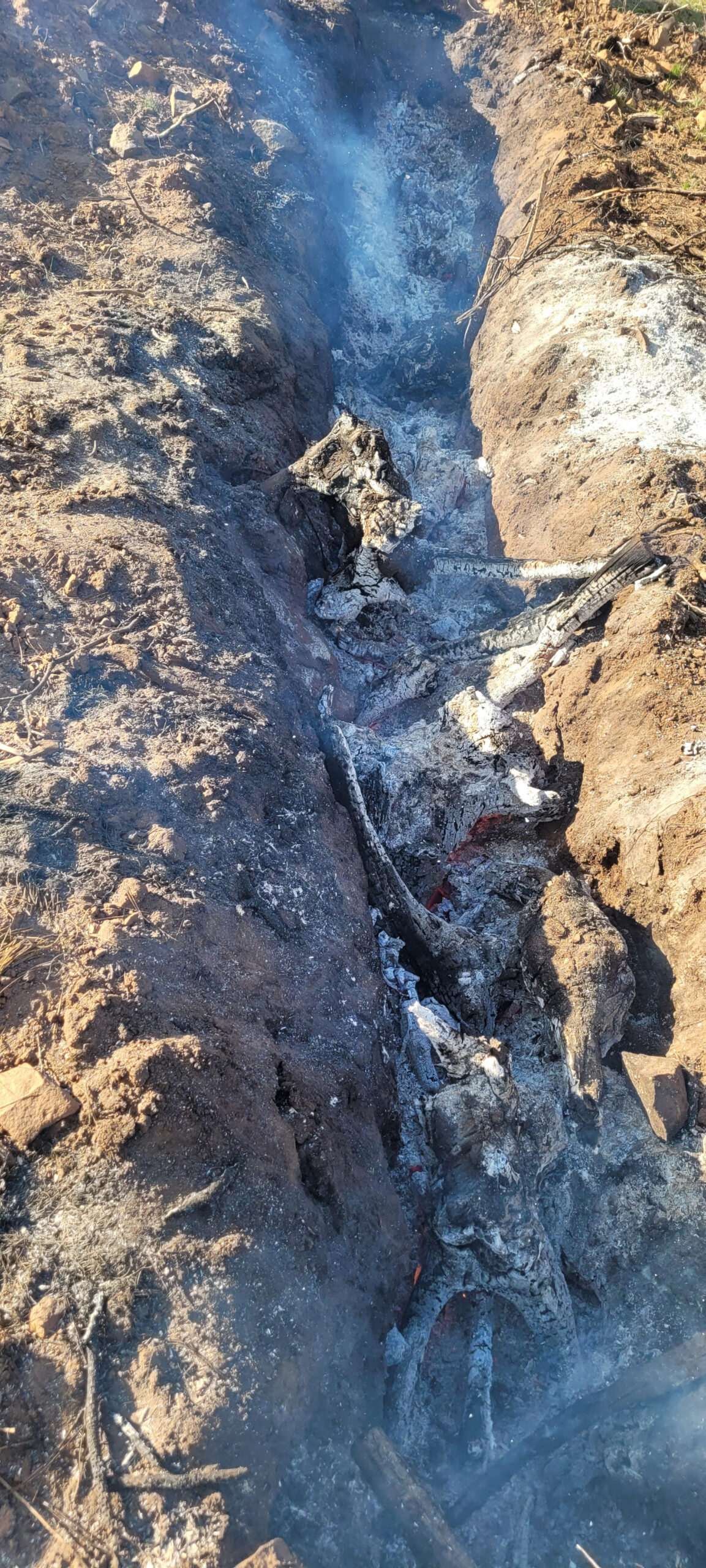
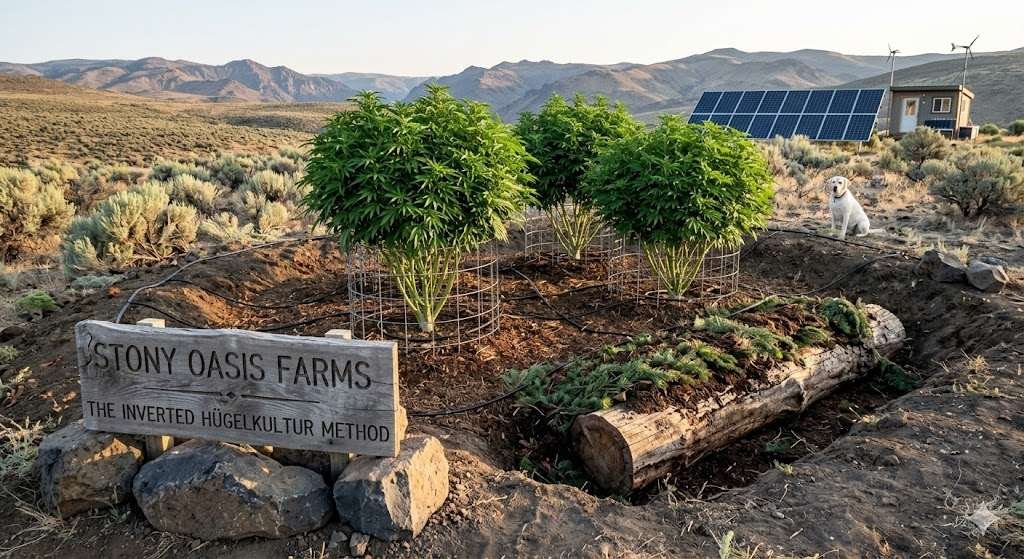
One of my favorite advanced techniques is what I call the Dryland Hugelkultur Planting Method.
Traditional Hugelkultur involves burying logs and debris to create a raised bed that holds water, but in a dry guerrilla setting, we do it in reverse. Instead of a mound, we dig a deep trench. At the bottom, I layer rotted wood, sticks, and dried leaves. I then top that with a mix of native soil and organic amendments. The wood at the bottom acts like a giant underground reservoir, soaking up spring rains and holding that moisture deep in the earth where the cannabis roots can find it.
You are essentially building a self-watering system that lasts for years. Plus, as the wood breaks down, it feeds the soil with beneficial fungi and nutrients, which is a key part of low-maintenance guerrilla growing, or even growing at home.
I have done this dozens of times growing cannabis, and this coming summer will be doing it again up on my off grid property. I plan to grow some of my best selling strains (I can legally grow 15 plants) for sensemillia again.
I did this last year, and you can read about it here… My 2025 Free Seed Garden…This time I will use my excavator and build a Dryland Hugelkultur. The excavator will make it easy.
I will be starting these plants in the middle of Feb. indoors so they will have some size when I put them out after the last frost. Then I will see just how big I can get them to grow. Will be an interesting experiment, and of course I will share it all with you.
Choosing Drought-Resistant Genetics
Success with guerrilla growing cannabis in dry climates starts with picking the right drought-resistant cannabis strains. Most cannabis strains can adapt, but some are better then others.
I like Indicas as most have originated in harsh environments.
Hybrids and Sativas can do well, but make sure you have enough season for them to finish. Just think about where the plant comes from—strains from the hotter, dryer regions of the world are built to handle heat and limited water.
I’ve found that many Autoflower varieties are also great for dry guerrilla spots because they finish so fast….and autos also have Ruderalis genetics…here is what Google says about this species of cannabis…Ruderalis has Resilience: Named after the Latin word rudera (meaning “rubble”), it is a “ruderal” species, meaning it is often the first to colonize land disturbed by human activity or harsh environmental conditions.’
So if you can get autos through the 8-10 weeks of their life cycle before the true “kiln-dry” heat of late summer hits, you are golden. And autos can be special when flowered in the dog days of summer!
However, if you want those giant photosensitive plants, stick to hardy classics. If you need help choosing the best strain…contact me.
Mulching Like a Pro to Beat the Heat
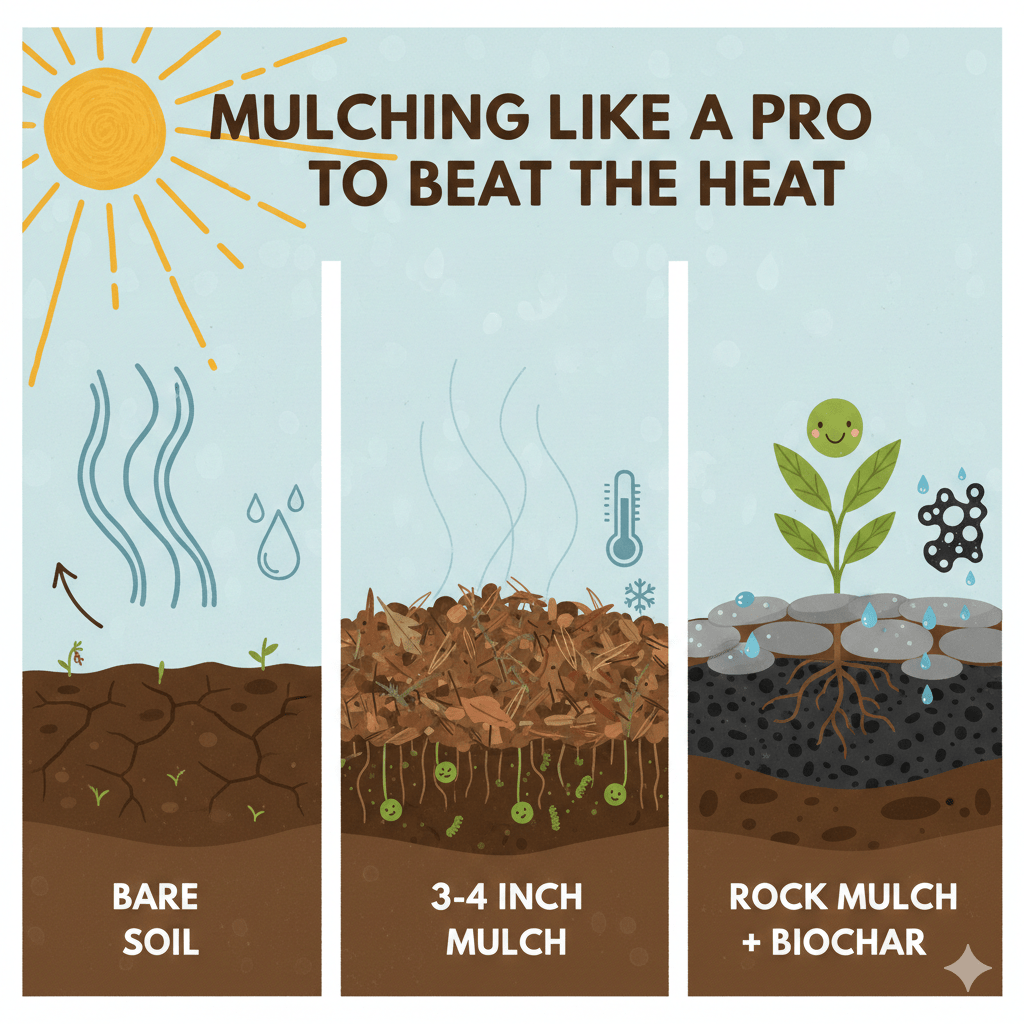
If you leave your soil bare under the summer sun, the heat is sucking all the moisture out of the ground. Proper mulching is non-negotiable for the arid grower.
I’ve learned that a thick, 3-4 inch layer of mulch can reduce soil temperature by 10-20 degrees. This keeps the delicate “micro-herd” of beneficial bacteria in your soil alive and happy, and throughout the root zone. For a guerrilla growing, I use whatever is around—dried grass, pine needles, or fallen leaves. This also helps with cannabis garden camouflage, as bare, dug-up dirt is a giant “look at me” sign for helicopters or hikers.
One year, I used flat rocks as a “living mulch” around the base of my plants.
Not only did the rocks keep the soil cool, but they also collected dew in the early morning, which would then drip down into the soil. It was a simple trick that can help keep your plants smiling.
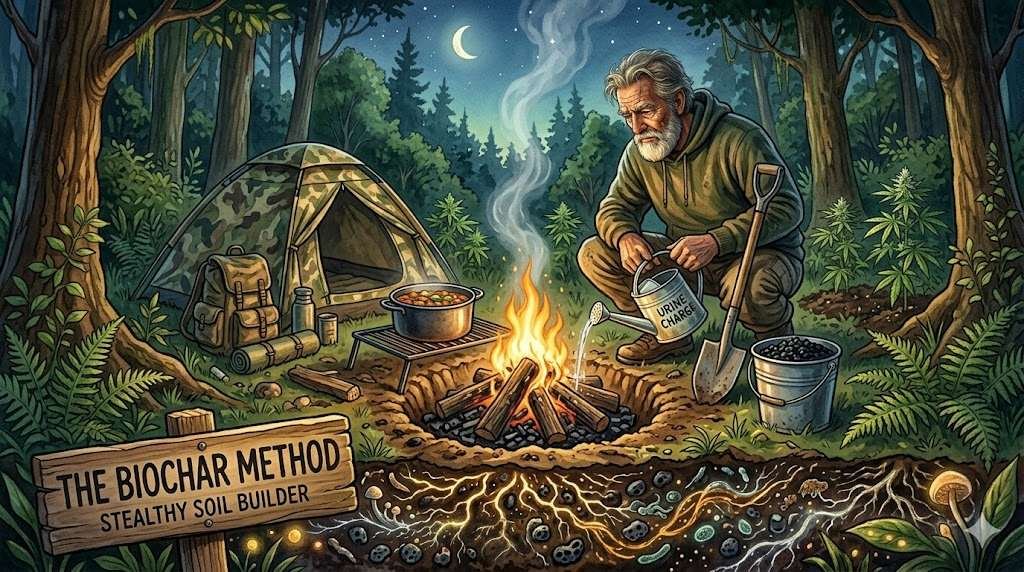
Additionally, using “biochar” in your soil mix and as a top dress can help. If using bio-char cover it with a lighter colored mulch. Biochar is like a coral reef for soil; its porous structure holds onto water and nutrients with incredible tenacity.
Common Mistakes in Arid Guerrilla Grows
The desert is unforgiving, and I’ve seen many growers lose everything to simple errors.
The most common mistake is over-visiting.
In a dry climate, you feel the urge to check on your “babies” every day because you’re worried they are thirsty. Don’t do it!
Every time you walk to your patch, you leave a trail, even if you think you are being careful. I would ONLY visit when it is absolutely necessary.
Other mistakes to avoid include:
- Poor Timing: planting too early you can lose them to frost, plant them too late they may run out of season to finish.
- Using the Wrong Fertilizer: High-salt synthetic fertilizers can actually make drought stress worse. Stick to organic, slow-release options.
- Visible Water Jugs: Never leave white or bright-colored plastic jugs at your site. Paint them camo or hide them under brush.
- Neglecting Soil pH: Arid soils are often very alkaline. Make sure to test your soil and adjust if needed, or your plants won’t be able to “drink” properly.
I’ve learned that being a successful guerrilla grower is about being a student of the environment. If you see the local weeds drooping, your plants probably are too. But if you’ve followed these steps, your patch will be a vibrant green island in a sea of brown. For more tips on troubleshooting your grow, swing by our Blog where we cover everything from germination to harvest.

Final Thoughts from The Ghost
There is nothing quite like the feeling of harvesting a crop that you and Mother Nature raised together in the wild. It builds a special kind of bond with the plant. When you finally sit back with a jar of that sun-grown, drought-tested bud, you’ll know it was worth every drop of sweat. Remember, the key is preparation—get your soil right, choose your genetics wisely, and use the my Ghost tactics to stay invisible and efficient.
I’d love to hear from you guys! Have any of you tried the Hugelkultur method in a dry area? Or maybe you have a secret “water-saving” trick I haven’t mentioned? Drop a comment below or send me a text—I’m always down to talk shop with fellow gardeners. If you’re ready to start your next adventure, browse our blog for more guides or check out our customer grows for some inspiration. Stay safe, stay hidden, and happy growing!
If you are new here check out my welcoming guide.
• Who is the Ghost? (My Reveal)
• Cannabis Growing Guide 2025-2026
• Real Customer Testimonials & Reviews
• Real Customer Harvest Photos
This article is provided for educational and informational purposes only. It is not intended as cultivation or grow advice, nor does it encourage any illegal activity. All cannabis seeds sold on JustCannabisSeed.com are novelty items, souvenirs, and collectibles only. Germination and cultivation of cannabis seeds may be illegal in your jurisdiction—you are solely responsible for complying with all local, state, and federal laws. We do not condone breaking any laws. For full details, please read our Disclaimer, Terms & Conditions, and Privacy Policy.