Blog
Cannabis Companion Planting for Pest Control
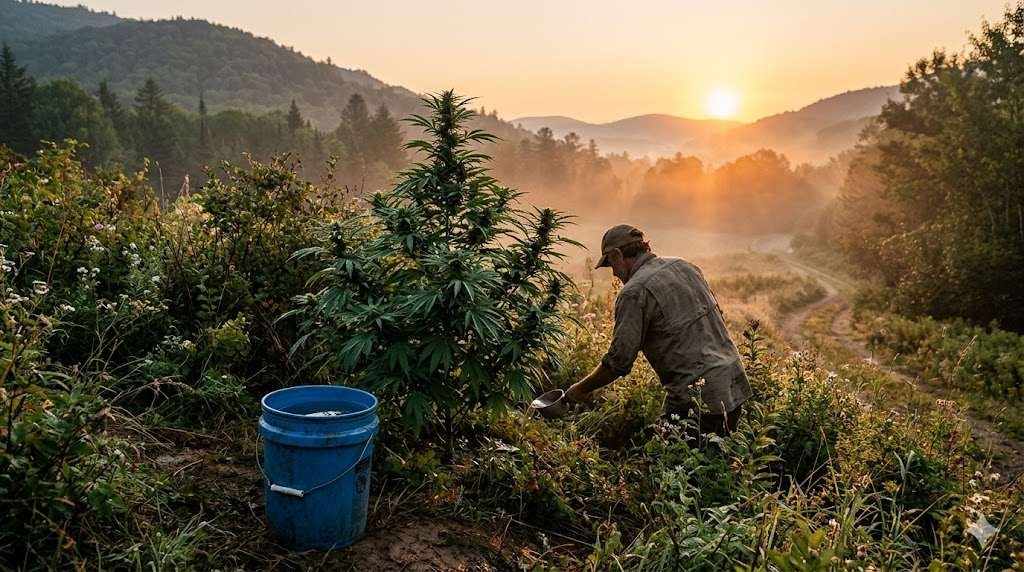
Nature’s Bodyguards in Your Cannabis Garden
While I have very few ‘bug’ problems in my neck of the woods, I know that is not the case everywhere. After 50 years of growing, I’ve learned that the best defense isn’t found in a spray bottle—it’s found in the power of Cannabis companion planting for pest control, and assuring your plants are growing vigorously enough to over come infestations themselves.
Why fight Mother Nature when you can hire her best soldiers to do the work for you? By surrounding your ladies with specific beneficial plants, you create a mini-ecosystem that naturally repels the bugs everyone hates.
When I started tucking my plants next to some companion plants, I realized they do help.
Not only did the pests get confused by the mixed scents, but the garden started looking like a beautiful permaculture paradise.
Additionally, companion planting isn’t just for outdoor gardens; I recommend these “bodyguard” plants in greenhouses and even small indoor tents to keep things organic and healthy.
Ready to turn your grow into a thriving, self-defending forest? Let’s get into the nitty-gritty of nature’s bodyguards!
Disclaimer: Always check local laws before growing cannabis, as legality varies by location. This guide is for educational purposes for growers in legal jurisdictions. JCS does not condone breaking any laws at any time anywhere.
Table of Contents
- Why Use Cannabis Companion Planting for Pest Control?
- The Top 5 Bodyguard Plants for Your Cannabis Garden
- Attracting Beneficial Insects: Your Winged Allies
- Improving Soil Health and Growth with Companions
- The Art of Trap Cropping: Taking the Hit for the Team
- Common Companion Planting Mistakes to Avoid
- Final Thoughts from The Ghost
Why Use Cannabis Companion Planting for Pest Control?
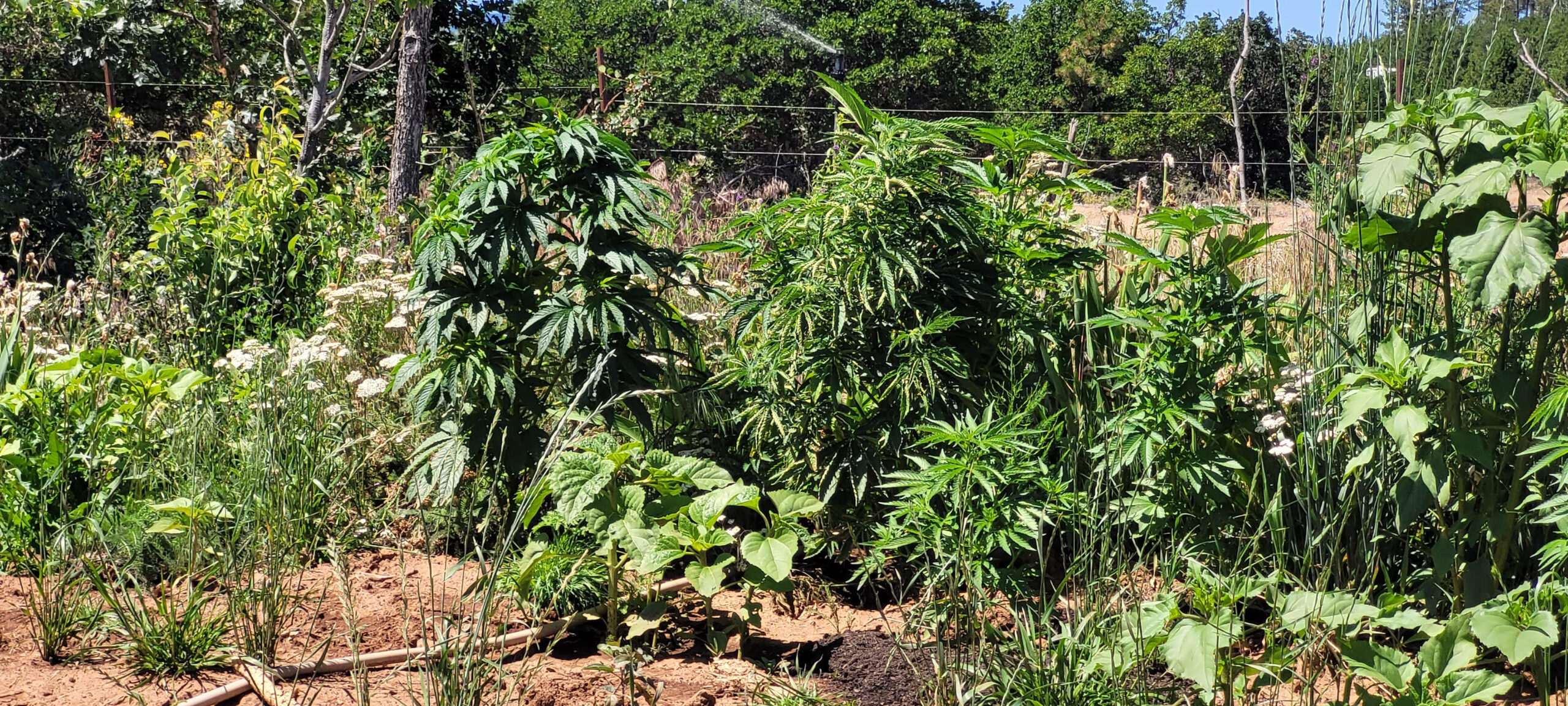
The core philosophy of Cannabis companion planting for pest control is simple: biodiversity equals resilience. In a natural forest, you never see just one type of plant growing in a perfect line; everything is mixed together. This variety creates a “scent wall” that makes it much harder for specialized pests like spider mites or fungus gnats to find their target. When you grow cannabis in a vacuum, you are essentially providing a buffet with no security. By adding beneficial plants for cannabis, you are installing a high-tech security system that works 24/7 without the need for any other measures…sometimes. it is just one step you can take to help assure a great grow.
I do not relying solely on pesticides, even organic ones…as they can lead to “resistance.” Pests can adapt! However, they can’t adapt to being eaten by a ladybug or being repelled by the strong oils of a peppermint plant. Thing is I never spray anything on my plants I do not want to consume.
From my experience, a diverse garden also helps with integrated pest management by maintaining a balance. You want some bugs in your garden, just the right ones! Additionally, many of these companion plants produce beautiful flowers and herbs you can actually use in your kitchen, making your garden double-duty and more sustainable. It’s a win-win for you and your plants.
The Top 5 Bodyguard Plants for Your Cannabis Garden
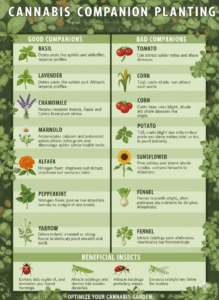
If you’re looking to start with Cannabis companion planting for pest control, you don’t need a degree in botany. You just need a few key allies that are easy to grow and highly effective. These plants have been my “go-to” soldiers for decades. They are hardy, fast-growing, and provide immediate protection for your cannabis, whether you’re growing in a backyard or a hidden guerrilla spot. Here is my “Ghost-approved” list of the best plants to tuck in around your cannabis seeds.
- Marigolds: These are the heavyweights of pest control. They produce a scent that drives away aphids and whiteflies. Their roots also release a chemical that kills harmful nematodes in the soil.
- Basil: Not just for your cannabis spaghetti! Basil is an incredible aphid repellent and is even thought to improve the flavor and terpene profile of nearby cannabis plants.
- Peppermint: This is a powerhouse for repelling ants, fleas, and even mice. Just be careful—mint grows like a weed, so I always keep it in its own pot tucked next to my cannabis.
- Lavender: The beautiful scent we love is a nightmare for moths, fleas, and even deer. It’s a great choice for guerrilla growing camouflage because it blends in perfectly with wild flora.
- Sunflowers: These act as great “lookouts.” They are tall, attract pollinators, and can even act as a physical shield against wind and prying eyes.
I remember one grow where I had a massive aphid problem. I planted a “border” of marigolds and sweet alyssum around my patch, and within two weeks, the aphid population plummeted. The marigolds kept the new ones away, and the alyssum attracted tiny parasitic wasps that took out the ones already there. From my own grows, I’ve found that mixing these plants directly into the same bed or large container works best. However, if you’re worried about root competition, placing pots of these herbs within 2-3 feet of your cannabis is still very effective at creating that protective scent barrier.
Attracting Beneficial Insects: Your Winged Allies
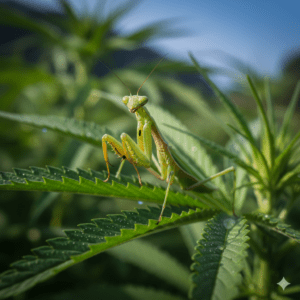
While some plants repel the “bad” bugs, others are designed to invite the “good” ones. This is a crucial part of Cannabis companion planting for pest control. You want to attract predatory insects like ladybugs, lacewings, hoverflies, and Paying Mantis.
These are the wolves of the garden—they spend their entire lives hunting down the pests that want to eat your buds. Plants like Dill, Fennel, and Yarrow have tiny, flat flower clusters that are the perfect landing pads for these beneficial insects. They provide nectar for the adults, who then lay their eggs near your cannabis so their larvae can feast on the pests.
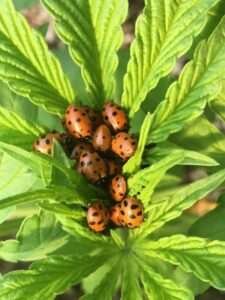
I once watched a single ladybug larva (which looks like a tiny black alligator) clear an entire leaf of spider mites in an afternoon. They are voracious and it was a beautiful sight!
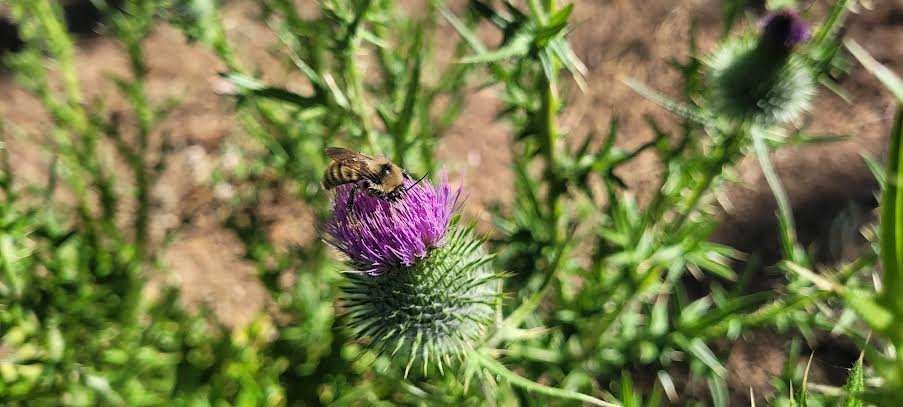
By providing “habitat” plants, you ensure these allies stay in your garden instead of flying off to parts unknown. Additionally, attracting pollinators like bees and butterflies helps the overall health of your local environment. I plant tons of different pollinators every year.
From my experience, a garden that hums and buzzes is a healthy garden. Just make sure you aren’t using any broad-spectrum sprays that might hurt your winged friends, even if they are labeled “organic.”
Improving Soil Health and Growth with Companions
Companion planting isn’t just about the “defense”; it’s also about the “offense.” Some plants are “dynamic accumulators” that reach deep into the earth to pull up minerals that cannabis loves. For example, Comfrey has a massive taproot that pulls up potassium and calcium. You can chop the leaves and use them as a “green mulch” for your cannabis. This is a huge part of sustainable cannabis gardening. Why buy expensive bottled minerals when the plants can mine them for you?
Clover and alfalfa are other favorites of mine. They are “nitrogen fixers,” meaning they take nitrogen from the air and puts it into the soil through their roots. It’s like a living mulch, keeping the soil cool and moist while feeding your cannabis a slow-release diet of nitrogen. I’ve learned that using clover as a ground cover in my outdoor beds leads to much greener, more vigorous plants during the vegetative stage.
Additionally, herbs like Chives and Garlic can help prevent soil-borne fungi and mold, which is essential if you’re growing in humid conditions. And they like many of the companions are perennial, plant once and they come back year after year.
The Art of Trap Cropping: Taking the Hit for the Team
Sometimes the best way to protect your queen is to give the enemy something else to eat. This is called “trap cropping.” In Cannabis companion planting for pest control, you plant a “sacrifice” crop that is even more delicious to pests than cannabis. Nasturtiums, and roses are the perfect examples. Aphids absolutely love them. If you plant nasturtiums about 10 feet away from your cannabis, the aphids will flock to the flowers and leave your buds alone.
It feels a little counter-intuitive to invite bugs into your yard, but they are already there….it’s all about control. By concentrating the pests on one “expendable” plant, you make it much easier to manage them. Just remember to monitor your trap crops closely—you don’t want them to become a “nursery” that eventually overflows onto your cannabis!
Common Companion Planting Mistakes to Avoid
Even though companion planting is a “natural” method, there are a few ways to get it wrong. I’ve seen beginners pack too many plants into a small pot, causing their cannabis to get “choked out” for light and nutrients.
Your cannabis plant is the star of the show; the companions are the supporting cast. Make sure there is enough airflow between all your plants, especially in the late flowering stage, to prevent powdery mildew or bud rot.
Additionally, be careful with plants that have invasive roots (like mint) or those that can grow tall enough to shade out your cannabis.
Here are a few other pitfalls to watch for:
- Allelopathic Plants: Some plants, like Fennel, can actually stunted the growth of nearby neighbors. Keep Fennel in a separate area of the garden.
- Over-shading: Sunflowers are great, but make sure they aren’t casting a shadow on your cannabis during the peak sun hours.
- Neglecting Water: Remember that more plants in a bed means more “drinkers.” You might need to adjust your watering schedule slightly.
- Forgetting to Deadhead: Keep your flowering companions (like marigolds) deadheaded to encourage more blooms and more pest-repelling scent.
- Wrong Timing: Plant your companions a week or two before your cannabis seeds so they are established and ready to protect the seedlings as soon as they pop.
I’ve learned that the best way to avoid these mistakes is to start small. Choose two or three companions for your first season and see how they interact with your specific strain. Every environment is different!
If you’re feeling overwhelmed, contact me for quick answers on soil and plant health.
And as always, if you’re ever in doubt, just stick to the classics like Marigolds, Onions, Garlic, and Basil—they are hard to mess up and provide excellent natural pest control for cannabis.
Final Thoughts from The Ghost
Using Cannabis companion planting for pest control is one of the most rewarding ways to garden. It turns your grow into an exploration of nature, a way to learn about other plants.
There is something deeply satisfying about seeing a garden full of life, where the plants are taking care of each other. It’s a method that has worked for thousands of years, and it’s how I’ve managed to pull off successful harvests in some of the toughest conditions imaginable.
By working with the earth instead of against it, you’ll end up with a cleaner, tastier, and more potent final product.
I want to hear from you! Have you tried any of these bodyguard plants in your garden? Did I miss your favorite companion herb? Share your successes (and your “oops” moments) in the comments below or reach out to me I love hearing about your gardens!
If you’re looking for more tips on how to keep your plants healthy, take a look at our guide on Low Stress Training or learn about how to test your seed viability. Let’s keep growing together and keep those pests at bay the natural way.
• Who is the Ghost? (My Reveal)
• Cannabis Growing Guide 2025-2026
• Real Customer Testimonials & Reviews
• Real Customer Harvest Photos
This article is provided for educational and informational purposes only. It is not intended as cultivation or grow advice, nor does it encourage any illegal activity. All cannabis seeds sold on JustCannabisSeed.com are novelty items, souvenirs, and collectibles only. Germination and cultivation of cannabis seeds may be illegal in your jurisdiction—you are solely responsible for complying with all local, state, and federal laws. We do not condone breaking any laws. For full details, please read our Disclaimer, Terms & Conditions, and Privacy Policy.