Blog
Growing Cannabis in Every US Climate: The Ghost’s American Guide
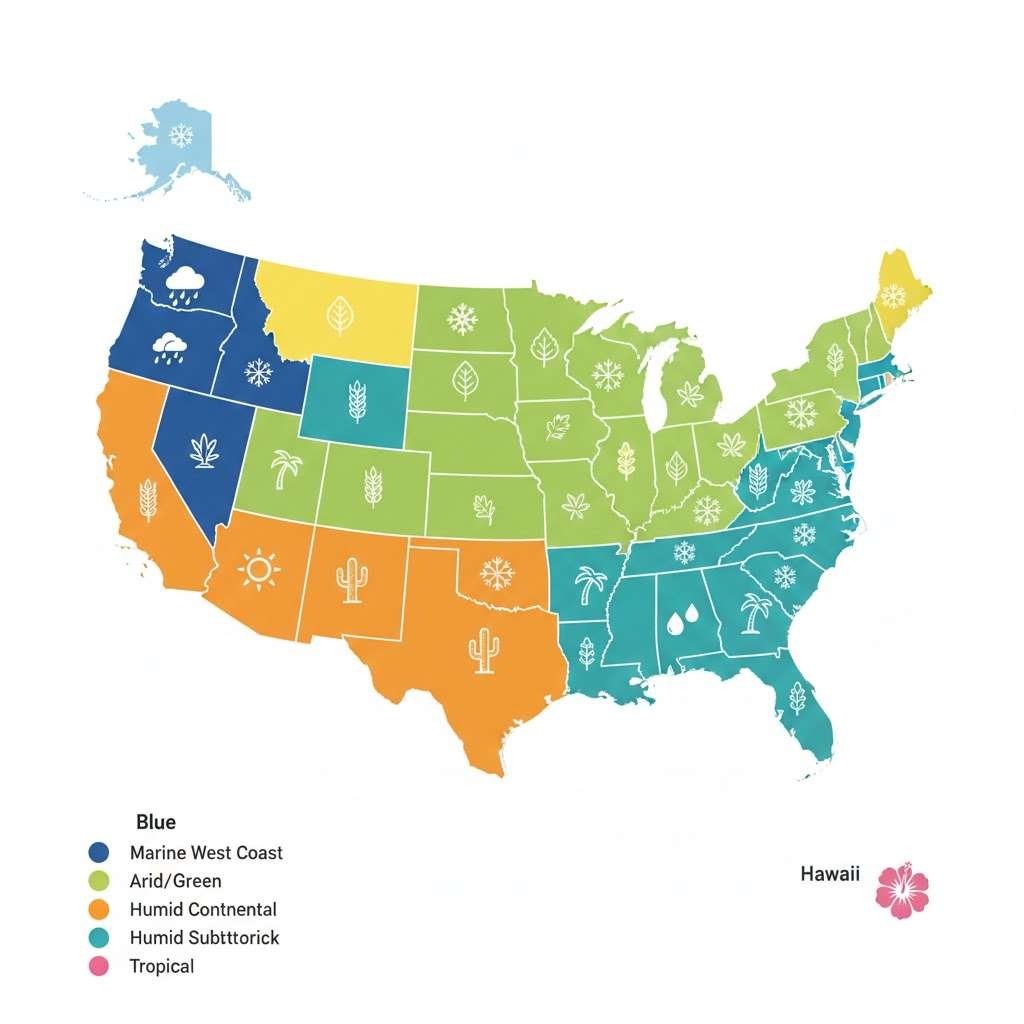
How to Grow Guerrilla….In Every Climate…from Coast to Coast
Growing guerrilla cannabis plants in America can be an act of defiance, a craft honed over decades of secrecy, and one must deal with landscapes that can change from a swamp to a desert quickly. I’ve spent 50 years growing this plant we all love—from clandestine forest grows in the Cascades to high-desert mesas—and I’ve learned that the “American Dream” of a heavy harvest requires more than just seeds; it can require adaptation. When growing cannabis outdoors the rules of engagement are dictated by your environment.
As the Ghost I have navigated every latitude of this nation pretty much, surviving everything from sudden mountain blizzards to dry deserts. I once found my plants covered in two foot of snow…and harvested those plants as well.
This guide is for the serious American cultivator who intends to succeed anywhere outdoors. We are going to dissect the United States by its unique growing zones, revealing the tactical adjustments can be imperative for a harvest. From the way you pivot into your grow site to the specific organic amendments that prevent total crop failure in the mountains. As climates vary so must your growing techniques.
Table of Contents
- Legal Disclaimer: The State-by-State Mosaic
- The PNW Challenge: Managing Rain and Mold
- The Arid Southwest: Water Stealth and Heat Shielding
- The Humid Southeast: Defeating the “Green Hell”
- The Northeast Race: Beating the Early Frost
- The Midwest Corn Belt: Soil Richness and Humidity Spikes
- High Altitude Rockies: UV Intensity and Cold Snaps
- American Soil Tradecraft: Living Soil for US Regions
- Tactical Companion Planting: The Living Shield
- Greenhouse vs. Open Sky: Tactical Choice of Cover
- Site Selection: The Art of the Invisible Entry
- Harvesting in Hostile Weather: The Final Stand
- Invisible Security: Thermal Signatures and Site Integrity
- Global Genetics: Selecting for Survival
- The Ghost’s Final Word on American Growing
Legal Disclaimer: The State-by-State Mosaic
Before we talk about growing in your environment, we need to talk about the law. My business is completely above board—I am fully licensed in Washington state and I pay my taxes every year. But this country is a patchwork of shifting regulations as we move into 2026.
While rescheduling is on the horizon (I hope), the federal/state divide remains a precarious difference of laws. It is imperative that you know your local statutes. Whether you’re in a fully legal state or a fully illegal state, your security is your own responsibility. I provide the expert DNA; you provide the common sense to operate within the bounds of the laws that govern you. We here at Just Cannabis Seed do not condone the breaking of any laws, anywhere, at anytime.
The PNW Challenge: Managing Rain and Mold
This is my home turf…and in the Pacific Northwest, we deal with a unique set of variables. here on the eastern half of the state we have hot dry conditions much of the growing season, and generally cold wet winters. The season varies with altitude. The higher in altitude your garden is the shorter the growing season…generally. Get the timing right (so your plants finish well before frost), supply enough water and you should be golden.
Meanwhile on the left half of the state they have beautiful summer days, but as soon as September hits, the “Big Wet” arrives. If you aren’t prepared for the damp, your colas will turn to gray mush before they even reach full maturity. I have had to cut down 12 ft tall plants covered with mold ridden colas, and discard them. In places like Western Washington and Oregon, the humidity and coolness is a silent killer. Choosing mold-resistant genetics is not just a preference; it is a tactical necessity if you want a harvest. And I would suggest equatorial Sativas for those kind of conditions.
The Ghost always insists on aggressive defoliation if you grow in the western wet temperate zones. You have to open up the center of the plant to allow the wind to blow through. Siting outdoor plants becomes even more important for a few reasons in this wet environment….
- Try to site them where they can enjoy all day sun. The more, the better!
- If the wind is blowing you want it to be blowing on your plants.
- Site them up higher in the environment, rather then down in an air stagnant hole.
- in the wet western parts of WA, OR, and CA you actually want your plants to be exposed to the elements.
- In these environments having to ability to cover your plants during extended rainy periods can be a game changer.
The Arid Southwest: Water Stealth and Heat Shielding
Growing in Arizona, Nevada, or New Mexico is a different beast entirely. Here, the sun is a hammer, and water is more valuable than gold. In these parched zones, the ability to water your plants is paramount. and soil preparation can be where the battle is won or lost. Moisture complacency in the desert can lead to immediate failure.
Mulching is a fundamental requirement here. I use at least four inches of local mulch to cover the plants root zone. This keeps the soil temperature down and prevents the sun from sucking every drop of moisture out of the earth.
The Ghost’s Tactical Tip: In arid climates, use subterranean watering. Buried “Ollas” but rather then clay pots, I use a 5 gal plastic bucket with a couple small holes in the bottom that will seep moisture directly to the root zone of your plants. I like to have a lid on the bucket complete with the screw on cap. Just remove the cap, fill with water, and you should be good for a week or longer. It leaves zero wet spots of the surface of the ground and minimizes evaporation to almost nothing as well.
The Midwest Corn Belt: Soil Richness and Humidity Spikes
If you’re in the “Corn Belt”—think Illinois, Indiana, or Ohio—you have the luxury of some of the richest topsoil on the planet. But don’t let the ease of the soil make you think you have it made. The Midwest can be a land of extremes. You’ll have a week of perfect 80-degree weather followed by a 90+ humidity spike that makes the air feel like a sauna. This is where “Septoria” and leaf-spotting diseases thrive. If your site doesn’t have a 90-degree angle of entry into a wind corridor, you are essentially asking for mold.
In the Midwest, your challenge can be the late-summer thunderstorms, the winds generated can be devastating . I’ve seen gardens nearly destroyed by those winds. You can use trellis netting to anchor your plants….because here again you want then in some of that wind to combat the humidity. The ability to put up some kind of wind block if needed can help. The Ghost’s preference is “Low Stress Training” (LST) to keep the canopy wide and flat, allowing the wind to whistle over the top rather than catching it like a sail. And for the love of the craft, keep your plants away from the edge of cornfields, and crops of any kind—the pesticides used by commercial farmers are detrimental to your organic purity.
High Altitude Rockies: UV Intensity and Cold Snaps
High-altitude growing—above 5,000 feet in Colorado, Wyoming, or Montana—is for the rugged, not the faint of heart. The air is thin, the UV levels are off the charts, and the temperature swings between day and night can be thirty degrees or more.
This stress can actually produces some of the most resinous cannabis on Earth… if your plants survive. The intense UV-B radiation triggers the plant to produce more trichomes as a form of “sunscreen.” This is why hashish from the high mountains is legendary for its potency. But you have to protect your plants from freezing.
In the Rockies, the soil doesn’t hold heat. I’ve found that planting in “sun-trap” terraces—a technique I’m currently using on my 80-acre property—is one way to manage this. By having stones near your plants, the rocks soak up heat during the day and radiate it back to the plants during the cold mountain nights.
Anther way to create a warmer micro-climate is to plant near a water source. It’s a natural battery that holds the heat of the day, and slowly releases it when the sun goes down. Just a few degrees difference can save a garden.
Watch out for early September cold snaps; having the ability to either cover the plants, or if grown in pots (my favorite way to handle it) you can move them indoors.
Living Soil for Various US Regions
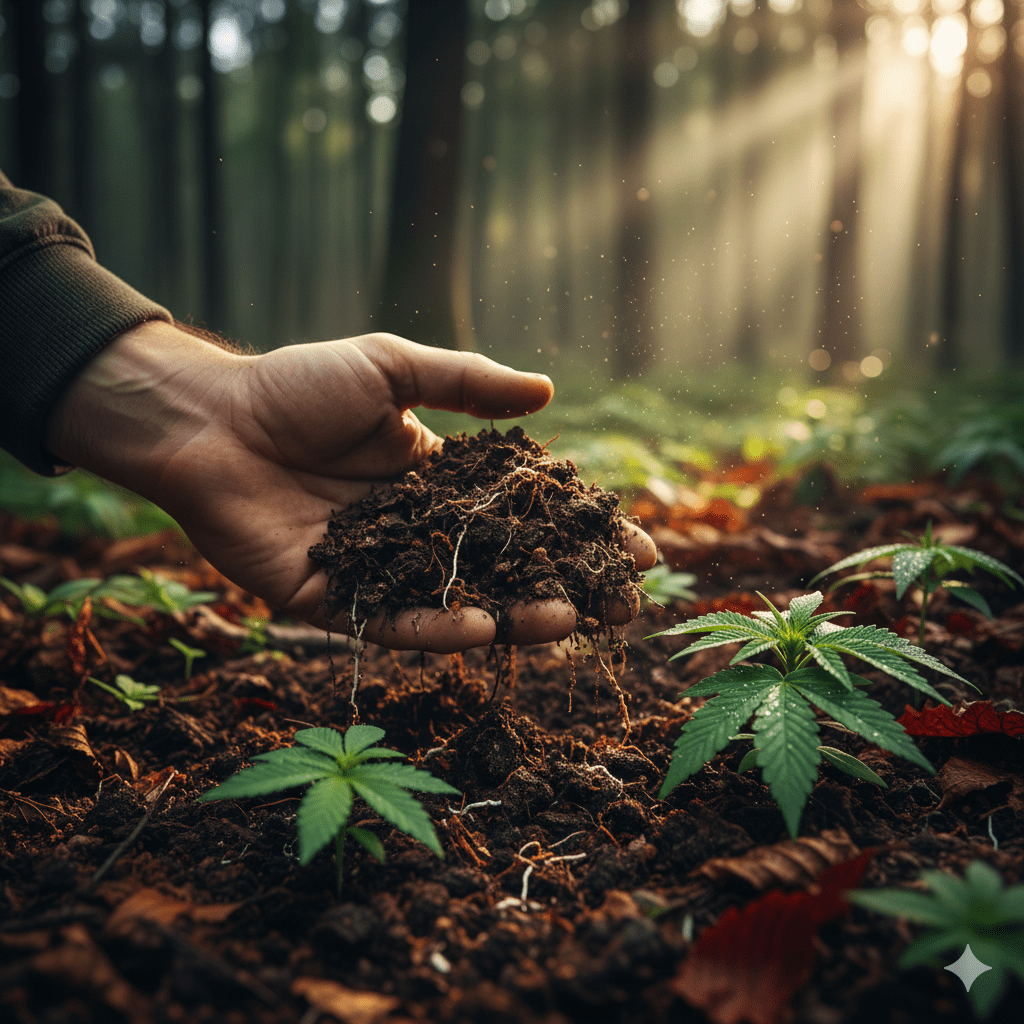
Soil isn’t just dirt; it’s a living biological engine. In the US, the native soil varies wildly. In the Southeast, you’re dealing with heavy red clay that suffocates roots. In the West, it’s sandy loam that drains far too fast. To dominate anywhere, you must build a “Living Soil” that acts as a buffer against your environment. I strictly advocate for organic amendments—bone meal, bat guano, kelp, and worm castings. Using synthetic “hot” fertilizers is a shortcut to nutrient burn and “sterile” tasting bud.
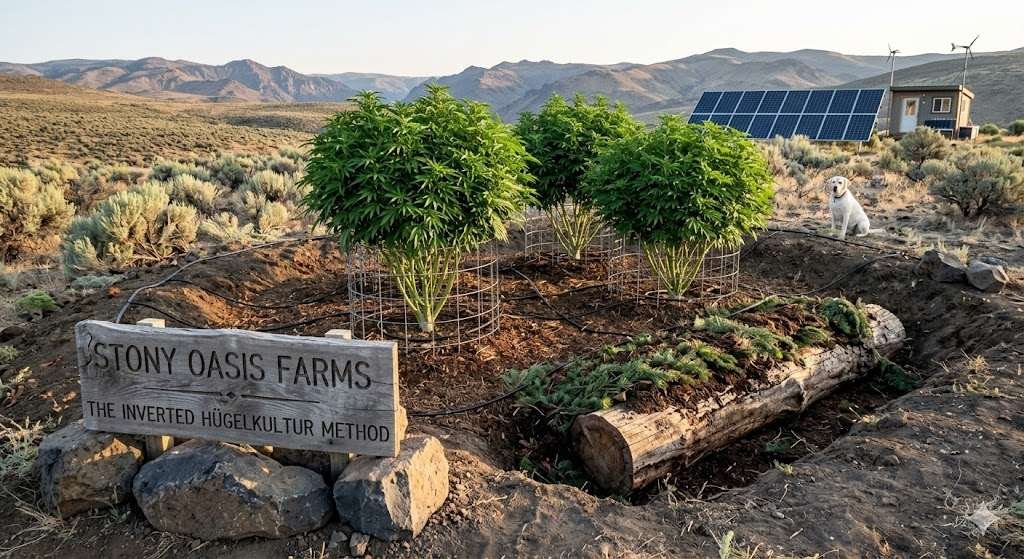
This summer…2026…I plan to try to grow some giants up on my off grid property. I will be growing them in a Dry-land Hugelkultur I will be building. I want to see if I can grow 10lb monster plants in that environment.
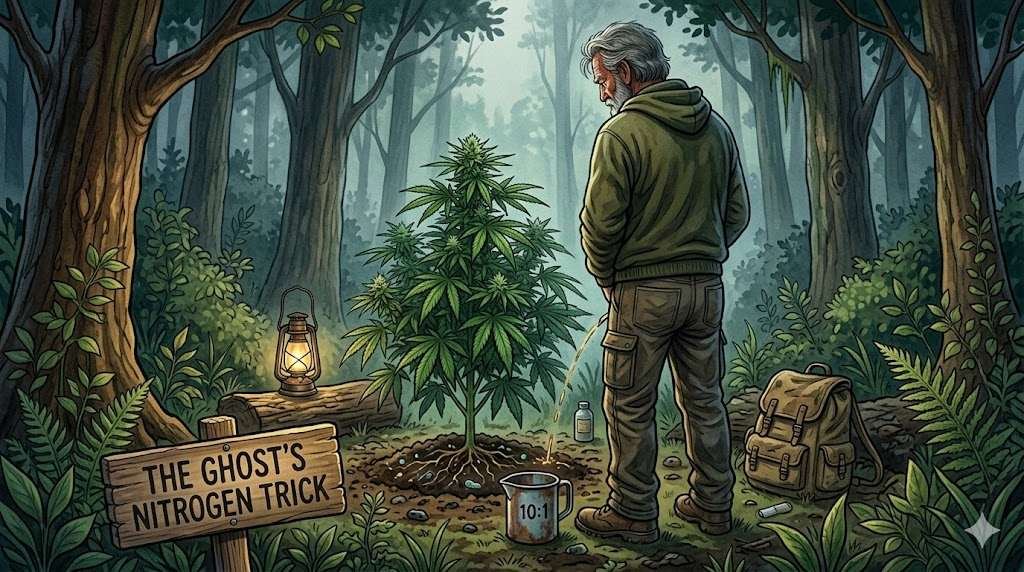
The Ghost’s secret weapon for American vigor? **Bird guano**, it can be gotten for free, a little goes a long ways, and your plants will love it! In early veg will make your plants “explode” with lateral branching. I have grown 15 ft. tall monster plants using only that.
If you’re on the coast, incorporate **Kelp Meal** to provide those trace minerals that the salt air can deplete. If you’re in the clay-heavy South, use **Perlite** or **Rice Hulls** at a 30% ratio to lighten the load and let those roots breathe.
A healthy plant has its own immune system; if your soil is alive with microbes, the plant can often fight off pests and pathogens on its own.
The Organic “Fuel” Strategy
Remember… the rate at which your plant consumes nutrients is tied to transpiration. In the dry West, they’ll drink more water and need “lighter” feedings; in the humid East, they’ll need more concentrated, available nutrition. Match the fuel to the engine. The bigger and more vigorous the plant, the more food it can eat.
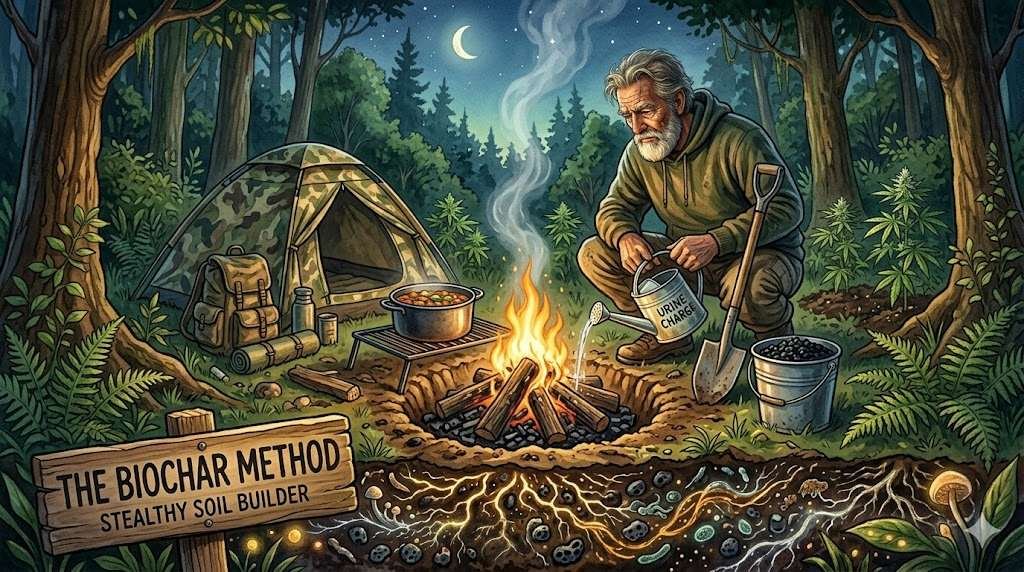
Have you ever tried “charging” your biochar with compost tea before amending your soil? It’s a master-level move that creates a permanent nutrient bank in your soil for years to come. For a deeper dive into my soil philosophy, read How to grow a ten pound cannabis plant.
Tactical Companion Planting: The Living Shield
A good clandestine grower doesn’t just grow cannabis; they grow an ecosystem. Companion planting is the ultimate “low-signature” defense against pests and prying eyes. If your site is a monoculture of cannabis, it can stick out like a sore thumb. If it’s a diverse garden of herbs and flowers, many would not even notice the cannabis plants. This is the art of the **Living Shield**. I like to spread my cannabis plants through out my garden as I did with this garden on my off grid property….Jerry’s Free Seed Garden
I will be growing about 2o different herbs, and lots of different flowers right along with the cannabis on Stony Oasis Farms. My favorite companion plants are garlic, onions, chives, Marigolds. I am all about diversity, and plants too love diversity….it makes for a healthy ecosystem.
Greenhouse vs. Open Sky: Tactical Choice of Cover
There comes a time when you must decide… do I trust the seasons, or will I run out of growing weather? The open sky offers the raw power of the sun and natural airflow, but it leaves you vulnerable to a volatile American climate. A greenhouse, however, is a literal magnifying glass for your efforts—and can make up for a season that is too short. Greenhouses do however, like indoor grows, allow bad bugs to propagate unchecked at times. So like indoors one must be virgil, and nip it in the bud.
I love greenhouse growing and will be building a Geo-thermally heated and cooled walipini greenhouse up on my property. I expect to install enough solar and batteries to run a couple of LED’s lights in my greenhouse for supplemental lighting. This will allow me to grow photo type of cannabis plants in the winter. Growing guerrilla I have built small greenhouses to protect from late frosts, but they need to be hidden well.
Site Selection: The Art of the Invisible Entry
Whether you are in a forest or a backyard, your entry and exit are the most dangerous parts of your day. A “sharp right-angle turn” into heavy brush is a fundamental site-selection secret. Most people leave a curved, “desire path” when they walk. A Ghost-approved entry involves walking past your site, ensuring no one is following, then making a sharp, 90-degree step onto a rock or a fallen log to enter the thicket. This leaves no visible trail for anyone to follow.
A ghost tip for site selection: When looking for a growing site the natural tendency is to choose an area somewhat free of plants, in the interest of clearing the site quickly. I am here to tell you don’t do that….there is a reason the plants growing there are sparse…poor soil, bad PH, ect. You are much better off to find a spot where the plants are thick and growing well, then clear your planting spot there. If other plants love the soil you cannabis plants are likley going to as well.
Harvesting in Hostile Weather: The Final Stand
The finish line is the most precarious time for any grow. You’ve spent months dodging pests, police, and drought, only to have a week of torrential rain or a sudden freeze threaten to turn your hard work into moldy compost. This is where you have to be cold-blooded. Most growers wait too long, hoping for “one more week” of swelling. I’ve learned that a 10% lower yield of clean bud is infinitely better than a 100% yield of rot. When the sky turns gray and the forecast looks detrimental, you take what the land gives you and you get out.
The Ghost always watches the hairs on the plants to determine when to harvest…but he also watches the barometer. If a storm system is moving in and your trichomes are 70% cloudy, you harvest. Period. Don’t gamble with the elements. You must be prepared to pivot your strategy in an instant. For more on harvest timing, check 10 Tips For Harvesting High Quality Cannabis.
Invisible Security: Thermal Signatures and Site Integrity
In 2026, the threats are “eyes in the sky.” Helicopters and thermal imaging have made outdoor growing significantly more precarious. If you are growing outdoors, you must break up your “visual pattern.” Nature doesn’t grow in straight lines. If you plant 20 plants in a perfect grid, they will spot them from 1,000 feet. I plant in clusters of three, tucked under existing canopy, and scattered randomly. It’s about being a part of the landscape, not an intrusion upon it.
The reality is that with the gear they have these days they miss pretty much nothing…if they fly your area they will likley find your plants. Here is a little trick that used to work, and still may to a point. Hang small plastic fruit on your plants…make them look like a small apple tree.
The Ghost’s Tactical Tip: Plant your cannabis on the north shore of a body of water, under a tree, but with full southern exposure. The ‘eye in the sky’ generally will not fly out over the water and look back under the tree you planted under. This is about the only method that will work well these days.
Global Genetics: Selecting for Survival
I am now shipping seeds globally to legal regions, but that doesn’t mean every seed is right for your backyard. Choosing a strain that isn’t suited for your climate can result in a disappointing harvest, or worst yet…no harvest. You need to select for traits that match your local challenges. Look for “Mold Resistance” for the East, “Heat Tolerance” for the West, and “Fast Flowering” for the North. This is the foundation of your success.
My genetics are bred for resilience. We don’t just test for THC; we test for the ability to take a beating and keep on growing. Whether you need our Wholesale Seed or just starting your first home garden, the DNA matters. I strive for strong genetics that can take a beating by nature and still produce a good harvest.
The Ghost’s Final Word on American Growing
At the end of the day, the “best” way to grow is the way that keeps you safe and your jars full. There is no magic pill. It’s about dirt under the fingernails and the willingness to hike that extra mile into the brush. As the Ghost I want to provide the genetics fit for the American landscape, but you have to provide the sweat. This country was built by people who knew how to work the land, and growing your own medicine is the ultimate act of American self-reliance.
I have touched base in this guide for most climates you will find in the USA, and I am always just an email away if you would like to discuss your particular growing challenges.
So, what’s your biggest hurdle right now? Are you fighting the Southeast humidity or the PNW rain? Tell me in a comment what you struggle with when growing your medicine.
• Who is the Ghost? (My Reveal)
• Cannabis Growing Guide 2025-2026
• Real Customer Testimonials & Reviews
• Real Customer Harvest Photos
This article is provided for educational and informational purposes only. It is not intended as cultivation or grow advice, nor does it encourage any illegal activity. All cannabis seeds sold on JustCannabisSeed.com are novelty items, souvenirs, and collectibles only. Germination and cultivation of cannabis seeds may be illegal in your jurisdiction—you are solely responsible for complying with all local, state, and federal laws. We do not condone breaking any laws. For full details, please read our Disclaimer, Terms & Conditions, and Privacy Policy.